

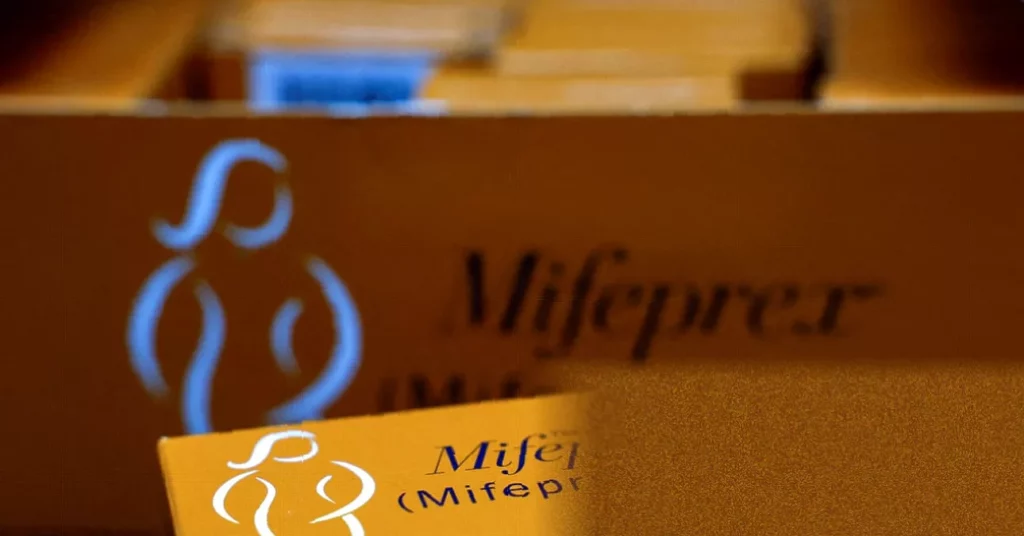
A US appeals court has temporarily blocked a federal rule allowing the abortion drug mifepristone to be dispensed through the mail, a decision that significantly curtails access to the drug nationwide and particularly affects states where abortion is already banned.
Court’s decision
A panel of the Fifth Circuit Court of Appeals in New Orleans issued the ruling on Friday, reinstating a requirement that mifepristone be dispensed in person. The court stated that Louisiana, which brought the challenge, was likely to prevail in its argument against the 2023 regulation adopted by the Biden administration. While the order is temporary, it marks the first time a court has substantially restricted access to mifepristone in a series of lawsuits challenging the drug’s initial approval in 2000 and subsequent rules that made it easier to obtain.
Impact on access
The ruling has immediate repercussions for abortion access across the United States. Medication abortion now accounts for 63% of all abortions in the country, up from 53% in 2020, and more than 7.5 million Americans have used mifepristone. The drug is also used in miscarriage management, meaning that restrictions could deny recommended medical care to a significant number of women experiencing pregnancy loss.
For individuals in rural areas, those with disabilities, or victims of intimate partner violence, the loss of telemedicine and mail-order access could effectively end their ability to obtain care. This is especially acute in the 13 states that have banned abortion entirely as of January 6, 2026, and in others with strict gestational limits. The federal court decision further complicates an already complex landscape of state-level restrictions.
The legal challenge
The lawsuit is part of a broader legal offensive against the US Food and Drug Administration’s regulation of mifepristone. The drug, also known as RU-486, was developed in France in the 1980s, approved there in 1988, and approved by the FDA in September 2000 after a lengthy process involving legal and manufacturing hurdles. Initially, its distribution was heavily restricted, requiring in-person dispensing by physicians and multiple clinic visits.
Over time, regulations were eased. In 2016, the FDA adjusted its rules to allow more clinicians to prescribe mifepristone, extend its use to up to ten weeks of pregnancy, and lower the recommended dosage. During the COVID-19 pandemic, the FDA temporarily suspended the in-person dispensing requirement, permitting mifepristone to be mailed to patients. In January 2023, this change was made permanent, allowing retail and online pharmacies to dispense the medication with a prescription.
Opponents of mail-order access argue that the relaxed rules facilitate the mailing of “high-risk abortion drugs” into states that protect unborn life, and that the method can be used coercively. The plaintiffs, led by Louisiana and represented in part by the Alliance Defending Freedom, contend that the FDA’s 2023 regulation is not based on sound science and that mifepristone is more dangerous than officials acknowledge. The defendants – the FDA and the Biden administration – maintain that the drug is safe and effective, backed by decades of research, and that the restrictions are medically unnecessary and politically motivated. Major medical associations have supported the drug’s safety profile.
The Fifth Circuit panel, composed of judges appointed by presidents Donald Trump and George W. Bush, concluded that Louisiana was likely to prevail. This ruling is one of several ongoing cases; the most prominent, Alliance for Hippocratic Medicine v. FDA, has reached the US Supreme Court, which agreed to review it. An emergency appeal to the Supreme Court is now anticipated, and the outcome will determine the long-term availability of the drug.