

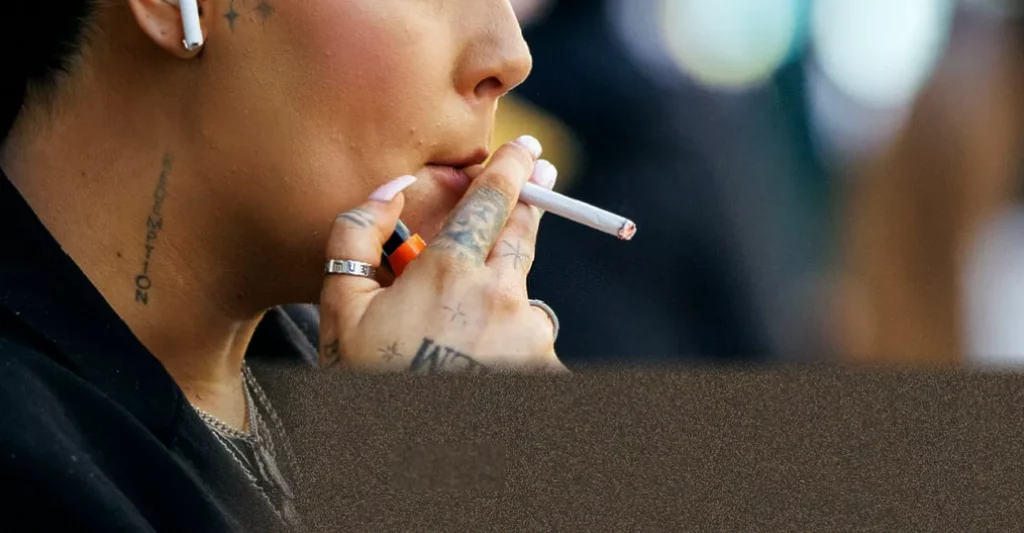
The UK has set out to end smoking forever with a generational ban that will quietly phase out the legal sale of tobacco, creating what ministers describe as a “smoke-free generation.” Anyone born on or after 1 January 2009 will never be able to buy tobacco products legally. From January 2027 the minimum age for purchasing tobacco will rise by one year every year, moving permanently upwards from the current age of 18. The effect is a fixed generational line: those above it can still buy cigarettes and vapes; those below it cannot. Over time the proportion of the population with legal access will shrink as older citizens die, until eventually no one in the UK will be able to buy tobacco at a shop.
How the generational ban will work
The legislation, which received Royal Assent on 21 April 2026, does not criminalise smoking itself. The burden falls entirely on retailers, who will be prohibited from selling tobacco products to anyone below the rising age threshold. This will create an unusual situation: a 40-year-old could legally buy cigarettes while a 39-year-old companion would be refused service, simply because of their birth year. That is deliberate, say public health officials. The law is designed to reduce smoking almost invisibly, year by year, rather than imposing an immediate outright ban that would provoke conflict over current smokers’ rights.
The ban covers all tobacco products: cigarettes, hand-rolled tobacco, cigars, cigarillos, pipe tobacco, waterpipe tobacco (shisha) and chewing tobacco, as well as herbal smoking products and cigarette papers. It also extends regulation to vapes and other nicotine products. The government has gained powers to restrict flavours, packaging and display of vapes, and to ban their advertising and marketing that deliberately appeals to children. Use of vapes will be prohibited in playgrounds, public and commercial buildings, cars carrying children, and outside hospitals and schools. A retail licensing scheme for tobacco and nicotine products is being introduced in England and Wales, bringing tobacco sales in line with alcohol; Scotland and Northern Ireland already have retail registration schemes.
Public health researchers are watching the policy closely as one of the first experiments of its kind. The Maldives became the first country to implement a similar generational ban, prohibiting anyone born on or after 1 January 2007 from buying or using tobacco, and extending the ban to tourists. New Zealand had passed pioneering generational ban legislation in 2022 but a subsequent government repealed it in February 2024 before it could take effect. Other countries, including Canada, have considered following suit, and bills have been filed in Hawaii and Massachusetts in the United States.
The rationale behind the ban
Smoking carries an enormous cost to the UK. Smoking-related disease and complications cost the National Health Service an estimated £2.6 billion each year, and the wider societal cost reaches about £11 billion a year. Other estimates put the direct cost to UK public finances at £21.9 billion annually when lost economic productivity, NHS and social care costs are included. In 2019-2020, more than 500,000 hospital admissions among those aged 35 and over were attributable to smoking. Cancer Research UK calculates that ending smoking could free up 75,000 GP appointments each month in England.
The human toll is equally stark. Smokers are estimated to die ten years earlier than non-smokers. Two-thirds of deaths among female smokers in their fifties, sixties and seventies are linked to smoking. Most smokers begin their addiction young: 90% of people who smoke started before the age of 21, often before they fully understood the health risks. Quitting is notoriously difficult – it is estimated that 80% of people who smoke have tried to quit and struggled. Most smokers later regret starting, polls show. The average cost of a pack of 20 cigarettes was around £15 in 2024, meaning a typical smoker spends £2,338 a year on tobacco. Tobacco companies make their profit from private sales, while the costs of illness are borne by individuals and taxpayers.
The mechanism behind the generational ban is rooted in a simple public health insight: if someone does not start smoking by their early twenties, they probably never will. By progressively raising the sale age, the law aims to prevent the next generation from ever taking up the habit, rather than trying to persuade current smokers to quit through bans that would be difficult to enforce. The approach is described by researchers as a “policy experiment” that could serve as a model for other nations. Belgium banned disposable vape sales in 2025, and France expanded outdoor smoking bans to areas frequented by children.
Smoker support and the rights debate
Despite the polarised political climate, the Tobacco and Vapes Bill enjoys remarkable cross-party consensus. Support for a smoke-free generation is high among Conservative, Labour and Liberal Democrat voters. Public opinion polls show strong backing: a YouGov survey in 2024 found 78% of the public supported the idea of a smoke-free generation, and 52% of smokers supported raising the sale age by one year every year. A further YouGov poll in February-March 2025 found 68% backing for the policy.
Some of the strongest support has come from smokers themselves. Many say they wish such a ban had been in place when they were younger. Most smokers became addicted before they were old enough to understand the consequences, and many are now trapped in an addiction they struggle to break. The vast majority of smokers who regret starting see the generational ban as protecting future children from the same fate. As one public health expert put it, the loudest champions of the law are smokers who wonder what their own health and life would have looked like if the legislation had been introduced when they were young.
There is, however, a deeper philosophical question about whether such a ban infringes on individual freedom. Opponents – including Nigel Farage, leader of Reform UK, who has vowed to repeal the law if his party comes to power – argue that adults should be free to make their own choices. Some retailers have also raised concerns about the economic impact, and critics warn that a ban could fuel a black market for tobacco. Vaping firms have expressed fear that the legislation might inadvertently push ex-smokers who switched to vaping back to tobacco.
Supporters of the ban argue that freedom means more than the ability to choose harmful products. It also means the freedom to grow up without being systematically targeted by industries built on addiction. In an overstretched NHS facing multiple demands, freedom can mean being able to access timely, high-quality healthcare that is not burdened by preventable disease. The law does not prevent individuals from smoking if they already do – it simply prevents the next generation from being sold the products that cause the harm. And the burden of enforcement falls on retailers, not on police arresting smokers.
Currently, around 5.3 million people aged 18 and over in the UK smoke – 10.6% of the population, the lowest proportion since records began in 2011. The 25-34 age group has the highest smoking rate at 12.6%, while the 18-24 group has seen the biggest reduction. Among young people aged 11-15, 11% reported having ever smoked in 2023, but 280 under-16s still start smoking every day in England. Meanwhile, vaping has overtaken smoking in popularity: around 5.4 million adults in Great Britain now use e-cigarettes daily or occasionally, with the highest usage among 16-24 year olds. The generational ban is set to reshape that landscape entirely, one birth year at a time. The government has also announced consultations on extending smoke-free laws to outdoor areas such as outside schools, children’s playgrounds and hospitals, and on creating vape-free zones. For now, the core mechanism is in place: a quiet, year-by-year disappearance of legal tobacco sales, designed to be as invisible as the addiction it aims to prevent.