

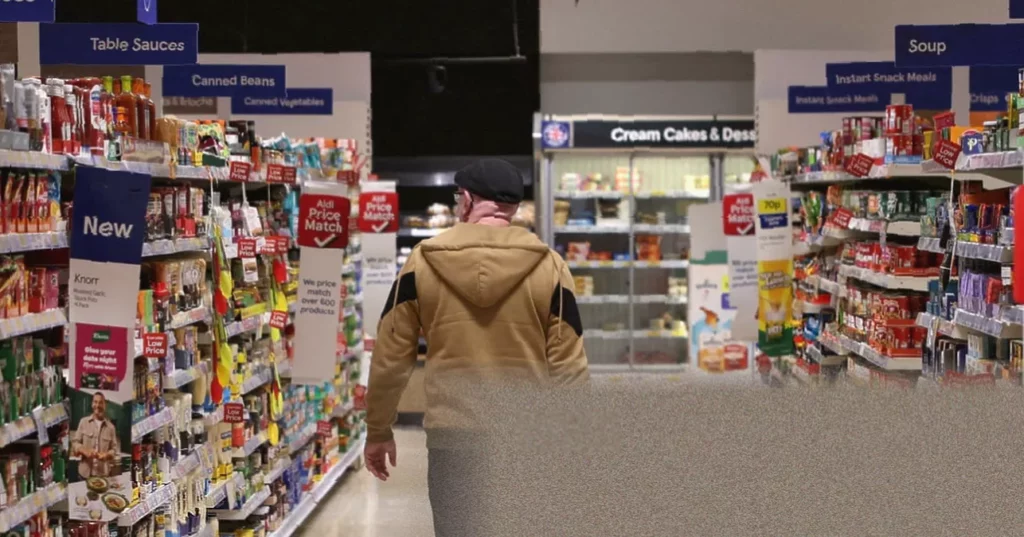
The Scottish Retail Consortium has condemned the SNP’s plan to introduce state-mandated price caps on essential food items as a “1970s-style gimmick”, warning the policy would do nothing to address the root causes of high shop prices.
The proposal, unveiled by First Minister John Swinney, would use public health powers to set maximum prices for staples like bread, milk, and chicken. The SNP frames it as a necessary intervention to help households during the cost-of-living crisis, but retailers have reacted with immediate hostility.
Ewan MacDonald-Russell, deputy head of the SRC, said the policy fundamentally misunderstood the economics of food retail. He argued that “elevated food prices are a direct result of soaring supply chain and commodity costs and frankly relentless rises in statutory costs imposed by governments.”
He said the fiercely competitive grocery market in Scotland had already kept food “among the most affordable of all the large European economies”, with supermarkets operating on “very slim margins” that had “fallen significantly in recent times”. Instead of price controls, which the SRC derided as “potty gimmicks”, the consortium said public policy should focus on cutting the regulatory and tax burdens on retailers so they could direct resources to keeping prices low.
The SNP plan also faces significant practical and legal hurdles. The Scottish Parliament lacks powers over trade rules, which are reserved to Westminster, and the post-Brexit Internal Market Act could allow the UK government to block the policy if it was deemed to create extra costs for businesses. The industry is likely to mount a legal challenge, similar to the lengthy battle fought by the Scotch Whisky Association over Scotland’s Minimum Unit Pricing for alcohol, upon which this food cap model is based.
Farage’s referendum comments ‘a gift to the SNP’
Elsewhere in Scottish politics, Reform UK leader Nigel Farage has stirred controversy by suggesting he could be open to a second Scottish independence referendum in the distant future, comments immediately seized upon by opponents as proof the party is “not a unionist party”.
In an interview, Mr Farage stated: “We believe in the United Kingdom. We think it’d be bad for both parties.” He reiterated the “once in a generation” argument for the 2014 vote but added, “If at some point in the future this issue comes back, then it’s probably quite reasonable to Scotland. It’s not relevant now, but I can’t tell you how people will feel in 20 years’ time.”
This aligns with comments from the party’s Scottish leader, Malcolm Offord, who has said the issue should be “parked” for at least a decade or “two Holyrood terms”, but refused to rule out a vote if the SNP won a future majority. The messaging is seen as a pitch for pro-independence voters dissatisfied with the SNP.
Scottish Conservative leader Russell Findlay said Mr Farage’s “incendiary comments confirm beyond doubt that Reform are not a unionist party” and were “a gift to John Swinney’s SNP”.
Mr Swinney, for his part, has ruled out any cooperation with Reform, which he has described as representing “far-right” politics. “My values are for a tolerant, inclusive, welcoming Scotland,” he said. “That’s the antithesis of what Reform and the far right represent.”
Defence spending row deepens amid gender parity claim
At Westminster, a row over defence funding has intensified following a report containing damaging allegations about Chancellor Rachel Reeves’s attitude towards Ministry of Defence spending.
In an article for *The Spectator*, journalist Tim Shipman quoted unnamed defence and Westminster sources criticising the record of Sir Keir Starmer and Ms Reeves. One source claimed Ms Reeves had said: “Why should we give money to a department that’s so far from gender parity?” when discussing defence funding. The report stated this had been denied.
At the Downing Street lobby briefing, the Prime Minister’s spokesperson declined to say the remark was untrue, stating only: “I’m just not going to get into speculation.”
The controversy comes as the government finalises its delayed defence investment plan amid reported internal disagreements between the Treasury and the MoD. Health Secretary Wes Streeting added fuel to the debate by suggesting welfare spending should be cut to fund defence, telling LBC: “We definitely want to reduce the welfare budget.” He implied defence would be a higher priority for Ms Reeves than for previous chancellors.
No 10 sought to downplay the suggestion of a direct trade-off, with the PM’s spokesperson saying defence and welfare were not a “zero-sum choice” and that the best way to reduce the welfare bill long-term was to get more people into work.
Starmer warns social media bosses over child safety
The Prime Minister has told social media executives he expects “real world changes” to protect children online, as the government consults on potentially banning under-16s from platforms.
After a meeting in Downing Street, Sir Keir Starmer’s spokesperson said the message was “simple: no free pass, no delay in putting children’s safety first.” The government is running a public consultation on measures including a social media ban for under-16s, mandatory overnight curfews, and disabling addictive design features. The consultation closes in May 2026.
The government has already included powers in the children’s wellbeing and schools bill to impose restrictions on companies quickly via secondary legislation. It is also planning real-world pilots with hundreds of teenagers to test interventions like app disabling and screen time limits. Campaigners like Esther Ghey, mother of murdered teenager Brianna Ghey, support stronger action, citing the impact of social media addiction on mental health.
The PM’s spokesperson said consequences for non-compliant companies would be “stark” and confirmed: “It’s not a question of if we will act, but how.”
In other developments, Downing Street said the Home Office and the Immigration Advice Authority were investigating BBC allegations that some migrants were being advised by legal professionals to make false asylum claims. The Home Secretary has said anyone attempting to “defraud the British people” will have their application refused and face deportation.
On the NHS, the service in England missed its interim target for A&E waiting times in March, with 77.1% of patients seen within four hours against a goal of 78%. Health leaders noted it was the busiest March on record for A&Es but said performance was at a five-year low. The overall waiting list for routine treatment fell for the fourth consecutive month to 7.22 million.