

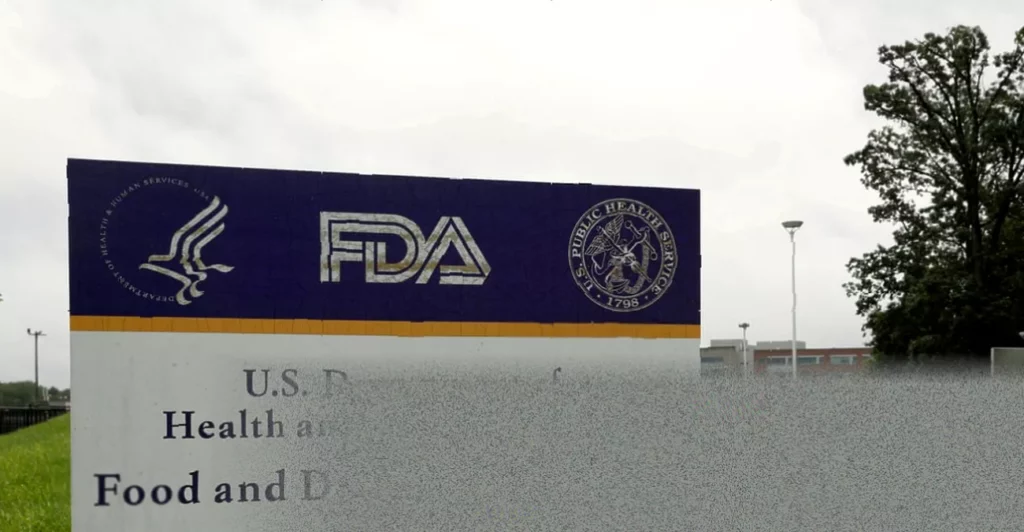
Political appointees at the US Food and Drug Administration have ordered the withdrawal of two peer-reviewed Covid-19 vaccine safety studies and blocked the submission of shingles vaccine safety abstracts to a major conference, according to allegations that have sparked concern over scientific integrity at the agency.
The studies — one examining 7.5 million Medicare beneficiaries and another analysing 4.2 million recipients aged six months to 64 years — had been accepted for publication by the journals Drug Safety and Vaccine before career scientists were instructed in October 2025 to pull them. Separate abstracts on the Shingrix vaccine, which confirmed risks already listed on the package insert, were prevented from reaching a drug-safety conference in February 2026 after senior officials declined to sign off.
A spokesperson for the Department of Health and Human Services (HHS) defended the moves, saying “the authors drew broad conclusions that were not supported by the underlying data” and that the FDA “acted to protect the integrity of its scientific process”. Critics, however, say the justification is a pretext, noting that the studies largely reaffirmed existing knowledge about vaccine safety and that the objections raised are precisely the kind of issues normally resolved through routine peer review.
The procedural anomaly
What makes the episode striking is not the scientific debate itself but the mechanism by which it was suppressed. In a functioning scientific system, when a journal’s peer reviewers find conclusions too sweeping, they ask for narrower language. Editors request revised discussion sections. Manuscripts reappear with more carefully bounded claims. What does not happen is for political appointees to instruct staff scientists to withdraw an accepted manuscript after peer review has been completed and the journal has agreed to publish.
The HHS spokesperson’s stated objection — that the authors “drew broad conclusions that were not supported by the underlying data” — describes, as one doctor and professor at UCLA put it in a widely circulated account, “the ordinary work of peer review”. The procedural anomaly is itself the story: political leadership overruling the standard scientific process at the point of publication, not at the point of design or analysis.
The studies in question were not exploratory. The first examined records of 7.5 million Medicare beneficiaries for 14 pre-specified adverse outcomes following 2023–2024 Covid-19 vaccination, using a self-controlled case-series design with follow-up of up to 90 days. Only one signal — anaphylaxis at roughly one per million Pfizer-BioNTech doses — exceeded statistical noise. After adjustments for billing codes, even that signal disappeared. The study was withdrawn after acceptance by Drug Safety.
The second study analysed 4.2 million recipients aged six months to 64 years for more than a dozen outcomes. It identified rare signals for febrile seizures and myocarditis — risks already noted on the vaccine’s label. An abstract of this study had been presented at a conference and remains online. The study concluded that the FDA “continues to conclude the benefits of vaccination outweigh the risks”.
The Shingrix safety analysis confirmed an elevated but low risk of Guillain-Barré syndrome (GBS), a risk that has been on the package insert for years. A 2021 study published in JAMA Internal Medicine had previously documented an increased risk, with an absolute attributable risk of about 5.17 excess GBS cases per million doses after the first dose. Another Shingrix abstract confirmed the vaccine’s efficacy was in line with clinical trial data. Both abstracts were blocked from submission to a major drug-safety conference.
A pattern of selectivity
The suppression of reassuring safety data appears to sit alongside the release of vaccine-critical claims at low evidentiary thresholds. In late November, a memo from the same FDA centre linked the deaths of ten children to Covid-19 vaccination — a claim the agency has not substantiated. That memo was released and widely covered. Two studies showing serious adverse effects to be very rare across nearly 12 million doses were not.
The selectivity, as the UCLA professor described it, is “the grammar of capture”. Vaccine-critical claims move through the agency with ease, while reassuring findings are held to standards no peer-reviewed paper could realistically meet. The pattern does not stop at vaccine safety. It now shapes which surveillance signals reach physicians and the public.
Those concerns are amplified by the state of the wider public health system. The Centers for Disease Control and Prevention (CDC) has lost approximately a quarter of its workforce over the past year. The agency has been editing its weekly journal, the Morbidity and Mortality Weekly Report, under directive, and its pathogen-specific dashboards have been edited or paused. The CDC sits inside the same HHS department that directed the FDA scientists to withdraw the vaccine-safety analyses.
The actions are taking place under HHS Secretary Robert F. Kennedy Jr., who has a long history of expressing scepticism about vaccine safety. Some experts suggest his views may be influencing the decisions, although HHS officials have not confirmed a direct role.
Rising stakes: World Cup and measles
The architecture of suppressed data faces its first operational test in 32 days. On 11 June, the FIFA World Cup opens across North America: 48 teams, 11 United States host cities, more than six million attendees over 39 days. The tournament arrives during a regional measles resurgence: more than 9,000 confirmed cases in Mexico since the outbreak began in February 2025, Canada’s loss of measles elimination status in November, and US vaccination coverage below the 95 per cent threshold required for population immunity.
In ordinary times, that combination would be a reason for heightened transparency. Instead, the surveillance system that clinicians rely on has been edited, paused, or captured. A respiratory cluster appearing in a Los Angeles emergency room in early July would, in a functioning system, reach physicians through three independent channels: local public health, the MMWR, and the CDC’s pathogen-specific dashboards. Each of those channels has been compromised this year.
Experts warn that blocking the publication of vaccine safety studies erodes public trust. Secrecy can backfire, leading distrustful individuals to perceive suppression where officials claim caution. Transparency is considered crucial for maintaining confidence in immunisation programs, particularly when large international events bring together millions of people from areas with differing vaccination rates.
The underlying vaccine safety data themselves are not disputed. For Covid-19 vaccines, anaphylaxis occurs at roughly 4.5 per million first doses of mRNA vaccines (based on US data from December 2020), with some meta-analyses suggesting a rate of 106.99 per million for anaphylaxis or anaphylactic reaction. Febrile seizures were identified as a rare risk in children aged 2–5 years after Moderna vaccination, with fewer than 11 cases. Myocarditis and pericarditis risks, highest in males aged 12–24 years, are already subject to FDA-required updated warnings. For Shingrix, the GBS risk has been on the package insert for years at an absolute rate of about 5.17 excess cases per million doses after the first dose.
None of this information is new to regulators. The studies that were withdrawn or blocked simply confirmed what was already known. The question is why the agency chose to keep those confirmations from the medical literature.