

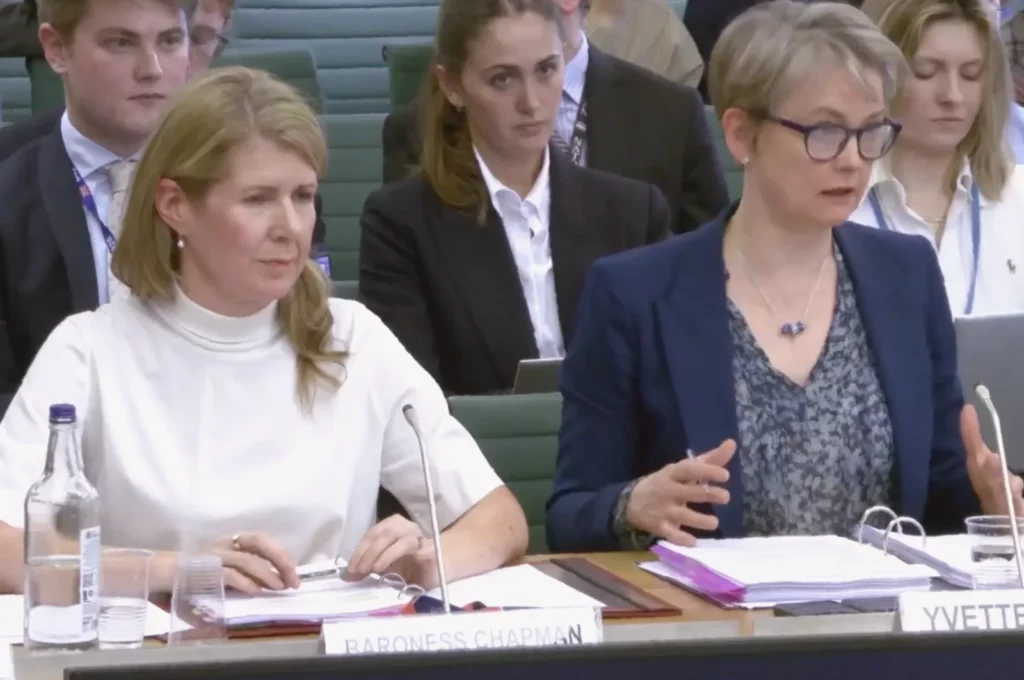
MPs have warned of significant gaps in the UK’s aid strategy, pointing to a lack of clear metrics for measuring success and a failure to communicate the value of foreign aid to the public. The findings, published by the International Development Committee (IDC) after an inquiry that heard evidence from The Independent’s Bel Trew, come as the government presses ahead with sweeping cuts to the aid budget, reducing spending from 0.5 per cent to 0.3 per cent of gross national income (GNI).
Report’s findings: evaluation black holes and a lost narrative
The IDC report, released alongside the government’s new strategy, identifies what it calls “significant gaps” in three areas: how the strategy will be monitored, how its outcomes will be judged, and how the case for aid will be rebuilt in the eyes of the British public. Sarah Champion, the committee’s chair, said: “As Ministers get to grips with the shrunken UK aid pot, there is some promise in the new approach they have set out. But what evidence has informed their strategy? What tangible benefits is it expected to yield?”
The report calls on the Foreign, Commonwealth and Development Office (FCDO) to produce “a clear qualitative and quantitative description of what success looks like” and to set out a model for development partnerships that defines the roles of FCDO missions, external stakeholders and departmental support. Without such a framework, the committee warns, it is impossible to judge whether the government’s promised “essential shifts” are delivering real results.
One of the strongest criticisms in the report centres on the government’s failure to tell the story of UK aid. The IDC argues for a fifth strategic shift — one focused squarely on communication — so that ministers can explain why spending public money abroad serves the UK’s own interests. The report states that the government needs to articulate how overseas aid tackles problems such as conflict and illegal migration, echoing comments from Jan Egeland, secretary general of the Norwegian Refugee Council, who called the aid cuts a “major strategic mistake”. Bel Trew, in her evidence to the committee, also recommended a better communication strategy alongside a specific plea to protect HIV funding — a plea the government ultimately did not carry out in its programme allocations last month.
Beyond the need for better messaging, the committee is pressing for an evidence base to guide decisions on which multilateral institutions — such as UN agencies — the UK will invest in, and a clear plan for how that support aligns with British priorities. The Independent Commission for Aid Impact (ICAI) has previously warned that the aid budget has been managed without an overarching strategy, and that billions intended for global poverty are being diverted to cover refugee costs inside the UK. The IDC report recommends that the government prioritise the declassification of in-country refugee spending from the aid budget, insisting that aid should be used only for overseas spending. Spending on in-donor refugee costs rose from £410 million in 2016 to £4.3 billion in 2023 — 27.9 per cent of UK official development assistance (ODA) — before falling to £2.8 billion in 2024, still 20 per cent of the total. Most of this money is spent by the Home Office, including on housing refugees in hotels. The ICAI has noted that the UK’s reported in-donor refugee costs per refugee are many times higher than those of other major European donors and that such spending “distorts policy choices and undermines transparency”.
Strategy shifts: from donor to investor — and from grants to systems
The government’s new aid strategy is built around four “essential shifts” in how the UK partners with recipient countries. The first shift is from donor to investor, using innovative finance and private sector capital — including through development finance institutions such as British Investment International (BII) — to unlock growth, jobs and trade. The second shift moves from internationally driven interventions towards working with more local partners. The third replaces the traditional grant model with the sharing of UK expertise: universities, the City of London, the Met Office, HMRC and strengths in education, health and technology are all cited as assets to be leveraged. The fourth shift is from delivering services directly to supporting countries in building their own education, health and economic systems so they can eventually thrive without aid.
The IDC acknowledges that the overall strategic direction — particularly the emphasis on fragile and conflict-affected countries — has been praised by the aid sector. However, it warns that without rigorous evaluation, these shifts risk becoming empty slogans. The report also calls for urgent investment in staffing at FCDO missions to ensure the new priorities can be implemented effectively on the ground.
The cuts themselves have been severe. Planned reductions to HIV-related funding are particularly stark: funding to UNAIDS is set to be cut by more than 83 per cent, the UN Population Fund has seen an 85 per cent reduction, and the UK’s pledge to the Global Fund to Fight AIDS, TB and Malaria has fallen by 15 per cent. Experts warn this could lead to millions of additional HIV infections by 2030. The greatest planned reductions are in bilateral programmes, with aid to Africa falling sharply, while a greater proportion of the shrinking ODA budget is being channelled through multilateral institutions — a move the IDC says requires a clear evidence base and an urgently needed multilateral development review.
Government response: a welcome but no detail
A spokesperson for the FCDO said the government “welcomes the International Development Committee’s report and will respond to the recommendations in due course”. The statement added: “Our commitment to international development remains a central part of our foreign policy. We know that tackling global challenges like conflict, instability and crises, as well as investing in growth and trade, is not only the right thing to do but also delivers mutual benefits to the UK and those we aim to support.”
The government has previously pledged to return ODA spending to 0.7 per cent of GNI when fiscally possible, with the current reductions linked to increased spending on defence and national security. However, the ICAI has raised concerns that the government may be considering scrapping the commission itself, which would remove a key independent scrutiny body. For now, the IDC’s report leaves the FCDO with a detailed list of unanswered questions — on success metrics, on public trust, on refugee costs and on the evidence underpinning each of the four shifts. The committee has made clear that it expects answers.