

More than 70 leading UK sporting organisations, backed by Olympic champion Sir Mo Farah, are urging the government to rethink potential cuts to school sports funding in England that could total £120 million. In a coordinated letter to Health Secretary Wes Streeting and Education Secretary Bridget Phillipson, the coalition — which includes ParalympicsGB, British Rowing, Aquatics GB, British Cycling, the England and Wales Cricket Board, the Lawn Tennis Association and British Gymnastics — warned that any reduction in investment would be “deeply counter‑productive” and risk “setting up for failure” the government’s own planned new PE partnership model.
The proposed cuts stem from a clash between two government departments. The Department of Health and Social Care had initially planned to cut its entire £60 million contribution to school sports, though ministers have since indicated they are reconsidering the level of cuts. Separately, the Department for Education has proposed an additional £60 million cut, which it has said would come from efficiencies achieved through a new partnership model. The combined total of £120 million has prompted what the sporting bodies describe as “deep concern” across the sporting world.
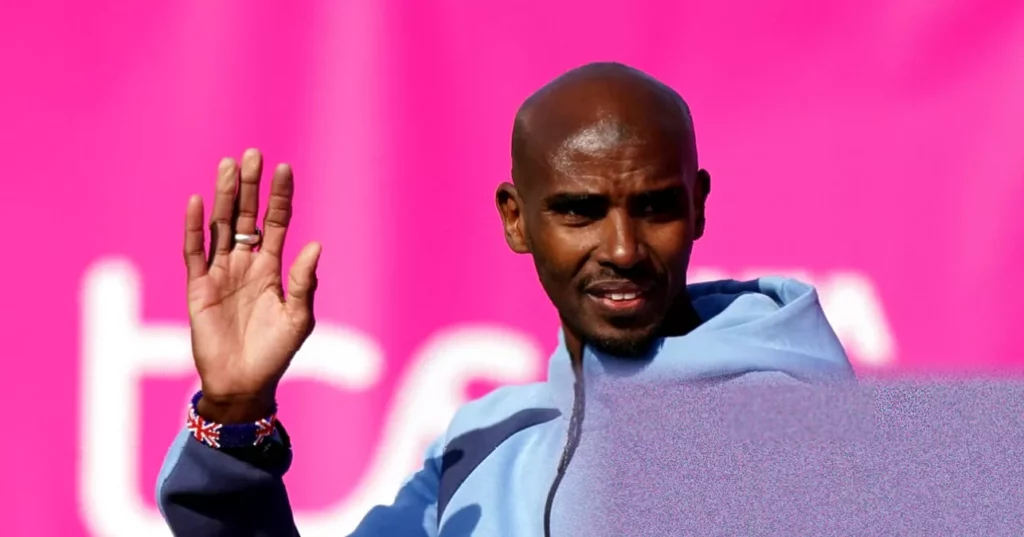
Sir Mo Farah, the Olympic gold medallist long-distance runner who serves as the national school sport champion, said he was “really concerned about rumours suggesting the government is going to cut funding for school sport. There is so much optimism across sport and education about the potential impact a new structure could have. We can’t risk this huge opportunity to improve PE and school sport being wasted for short-term savings when in the long-term it will damage children’s happiness and health. I hope the government listens to leading voices and quickly confirms current spending levels on PE and school sport will be maintained.”
The letter, coordinated by the Sport and Recreation Alliance, warns that the uncertainty over funding is already causing harm. “The uncertainty created by the lack of clarity on future funding is already having an impact, with many schools and sector organisations unable to commit to longer-term planning beyond the end of this school year,” it says. The organisations stress that “quality, inclusive PE and school sport is critical to our children’s health and wellbeing, academic success and sense of belonging in school” and that it “provides the essential foundation for all children and young people to be active throughout their lives and, for some, to become the next generation of sporting stars.” Any reductions, the letter adds, “risk having a hugely detrimental effect on children’s health, wellbeing and opportunity.”
Proposed cuts and the scale of the challenge
The funding decision is expected to be announced as soon as next week. The proposed cuts come despite growing concerns about inactivity among children contributing to obesity and lasting health inequalities. Sport England has been highlighting a growing problem with inactivity: fewer than half of children in England meet the Chief Medical Officer’s guideline of at least 60 minutes of moderate to vigorous physical activity per day. Government figures published last year confirm a significant decline in the number of hours allocated to PE in secondary schools, down by nearly 4,000 hours. The most significant drop has affected 11-14-year-olds — the same age group experiencing the fastest growth in obesity.
Ofsted’s subject report on PE, published in September 2023, found that while most primary schools timetable two hours of PE, only about half of secondary schools do. The report also noted that many secondary schools omit certain activity areas from their curriculum, failing to match the ambition of the national curriculum, and raised concerns about limited evaluation of swimming and water safety in primary schools. Childhood obesity data from 2023/24 shows that 9.6% of reception-age children were obese and 12.4% were overweight; for Year 6 pupils, the figures were 22.1% obese and 13.8% overweight. Overall, 26.8% of children aged 2 to 15 were overweight or obese in 2022/23, with obesity prevalence more than double in the most deprived areas compared to the least deprived.
The new PE partnership model — and why existing funding is essential
The changes to PE from next year, proposed by Education Secretary Bridget Phillipson, will replace the existing sports premium with a PE and school sports partnership network. The current sports premium — a ring-fenced grant introduced in 2013 — has provided primary schools with funding to improve their PE, physical activity and sport provision. Initially £150 million per year, it was doubled to £320 million annually from 2017-18, partly funded by the Soft Drinks Industry Levy. The government has committed to continuing this funding until at least the end of the 2024/25 academic year. The new partnership model is designed to guarantee at least two hours of physical activity per week, build partnerships between schools, local clubs and national governing bodies, address regional disparities in sports offerings by requiring schools to publicly advertise their sports provision, and focus on breaking down barriers to sport for less active children, particularly girls and pupils with special educational needs and disabilities (SEND). It will be supported by a new “Enrichment Framework” to ensure equal access to high-quality extracurricular activities, and the government has said it will target funding where it is most needed.
The sporting bodies have made clear that they are supportive of the new model, but only if it is properly resourced. In the letter, they state: “A reduction in funding risks setting it up for failure before it has got off the ground and undoing much of the progress made in recent years. There is a real opportunity to build on the world-leading PE and school sport system introduced under the last Labour government and we believe it is essential it is given the right resources to have the best chance of success. Reducing funding would run counter to these aims and ultimately negatively impact those who stand to benefit most.” The letter also notes that there is significant uncertainty in the sector over how the new partnership model would work, and that a lack of clarity on funding is already preventing longer-term planning.
The Sport and Recreation Alliance’s chief executive, Lisa Wainwright, said: “At a time when children’s physical and mental wellbeing must be a national priority, a reduction in funding for PE and school sport would be deeply counter‑productive. We are therefore deeply concerned to hear that funding may be reduced and alongside our members, including national governing bodies we represent, we are urging ministers to provide clarity that investment in PE and school sport will be maintained, ensuring every child, regardless of background, has the opportunity to be active.”
The broader context includes the government’s stated ambition to create the “healthiest generation of children ever,” with initiatives such as restrictions on junk food advertising, expansion of free school meals, and universal free breakfast clubs. Sport England has also invested £100 million to upgrade sports facilities. However, the coalition argues that cutting school sports funding would directly undermine those goals. The cuts, if implemented, could lead to millions of children losing opportunities to play sport, learn vital life skills like swimming, and stay active — with children from low-income families likely to be worst affected, as schools with a higher proportion of pupils on free school meals may struggle more to maintain sporting provision. The existing Inclusion 2028 programme, backed by £300,000 in its first year, aims to improve access to PE and school sport for pupils with SEND through teacher training and new extracurricular clubs, but its impact would also be jeopardised if core funding is reduced.