

The government’s relaunched Women’s Health Strategy, while ambitious in its aims to tackle systemic bias in the NHS, risks perpetuating the very health inequalities it seeks to solve if it fails to confront the profound impact of ethnicity and culture on women’s healthcare experiences.
A Strategy Built on Women’s Voices
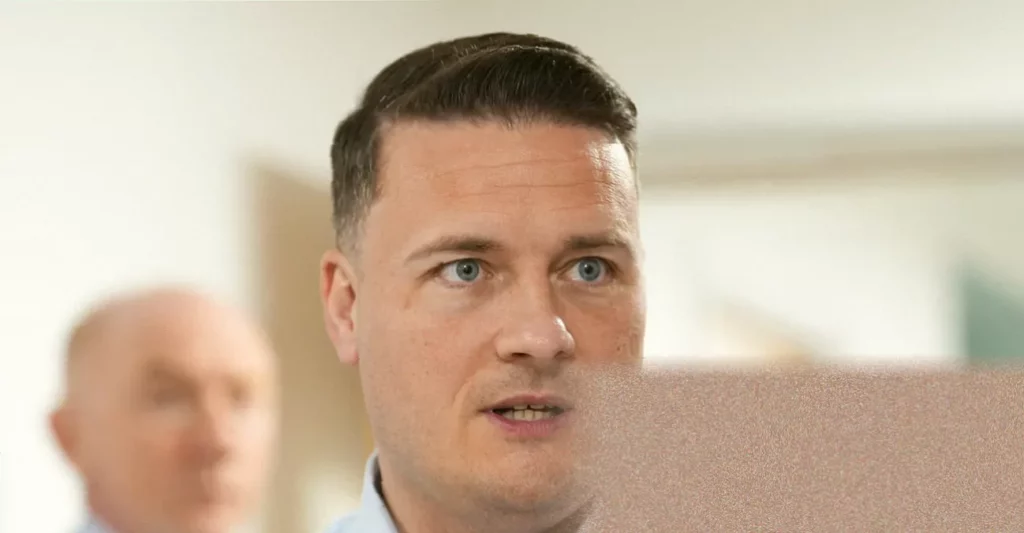
Unveiled by Health Secretary Wes Streeting on 15 April 2026, the strategy for England pledges to place women’s voices at the centre of care and tackle “outdated and misogynistic practices”. Its key measures are a direct response to critical failings: over 565,000 women were on gynaecology waiting lists as of January 2026, with plans to redesign pathways for conditions like heavy periods. It promises a new standard for pain relief during invasive procedures like coil fittings, and a trial linking patient feedback directly to NHS provider funding. “We need to hit medical misogyny where it hurts – the wallet,” Mr Streeting said.
The strategy also launches a £1.5 million Femtech challenge fund, commits to a £1 million menstrual education programme, and plans specialist regional centres. It builds upon a 2022 strategy, which a parliamentary report found had made insufficient progress. The government’s National Institute for Health and Care Research (NIHR) will continue investing in women’s health studies, including new sex and gender policies in research, where historically less than 2.5% of medical research funding has gone to reproductive health.
“That Woman is Me”
For campaigners like Vanessa Haye, a Project Manager at The Francis Crick Institute, the promise to listen rings hollow without explicit action on racial disparity. Her personal story, shared in a public letter, encapsulates the “medical gaslighting” the strategy names. She describes seeing a GP for severe period pain, only to be told it was normal and prescribed the pill. Two decades later, after years of dismissal, she received a chronic condition diagnosis she long suspected.
This experience is devastatingly common. A survey by Mumsnet found over half of women believe the NHS is institutionally misogynistic, with 64% having their pain or symptoms dismissed as “normal” or “in their head”. For endometriosis, the average diagnosis time is now nearly nine years and ten months, a figure that worsens to 11 years for diverse ethnic communities. Almost half of respondents visit their GP 10 or more times before diagnosis, with 78% told they are making a “fuss about nothing”.
The Systemic Weight of Ethnicity and Culture
The strategy’s success hinges on addressing why these experiences are not uniform. As Ms Haye states, “Ethnicity, culture and access continue to shape who is believed, how quickly, and with what outcome.” This intersection of misogyny and racism—termed “misogynoir” when describing the specific discrimination against Black women—manifests in stark outcomes.
Analysis by The King’s Fund highlights profound disparities. Black women in London experience up to three times the rate of long-term conditions like chronic pain and anxiety. Most critically, they are four times more likely to die in pregnancy or shortly after compared to white women in the UK. Access barriers persist across ethnic groups; women from South Asian backgrounds and immigrant women or those without English as a first language face exclusion. In fertility care, Black people in the UK are over 25 times less likely to access treatment than white counterparts, with consistently lower IVF birth rates for ethnic minority women.
These inequalities are baked into systemic priorities and urgency. The Royal College of Obstetricians and Gynaecologists has highlighted a gynaecology care crisis, with waiting lists among the longest in the NHS and over 763,000 women waiting at their peak. There are instances, noted in research, where female emergencies like ovarian torsion are not treated with the same urgency as equivalent male conditions like testicular torsion.
Without a targeted focus, even innovative solutions risk widening gaps. The strategy’s £1.5 million Femtech fund, while welcome, raises equity concerns if funding does not reach a diverse range of founders and address the specific needs of marginalised groups. The planned “Women’s Voices Partnership” by 2027 must be constructed to authentically represent this diversity, or it will fail to inform policy effectively.
The Women and Equalities Committee has already highlighted “medical misogyny” and diagnostic delays. The new strategy’s measures on waiting lists and pain relief are necessary interventions, but as the evidence shows, they are not sufficient. Creating systems that are genuinely inclusive requires confronting not just gender bias, but the compounded prejudice that leaves ethnic minority women fighting hardest to be heard, often with the most tragic consequences.