

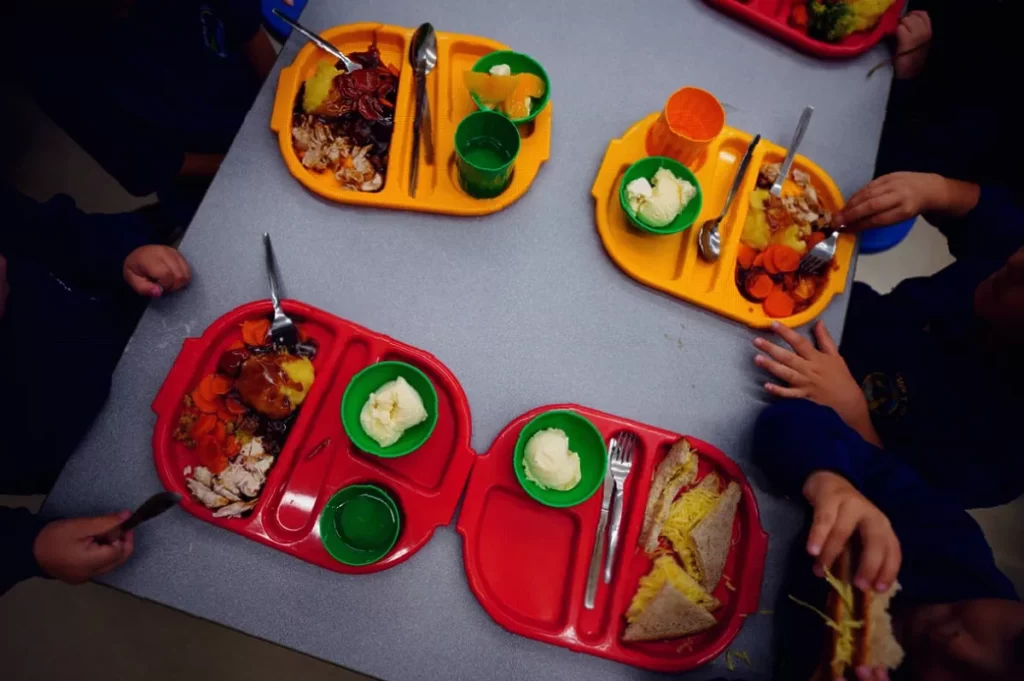
Schools across the UK are being forced to reduce the size of meal portions served to pupils as they struggle with the soaring cost of ingredients, a situation that is alarming parents and undermining ambitious new government plans to improve children’s nutrition.
Munira Wilson, the Liberal Democrats’ education spokesperson, said she was hearing direct concerns from families and school leaders. “From talking to parents, head teachers and school governors in my constituency, I know that many are worried about the rising cost of food, and in many cases the current funding just isn’t enough, forcing schools to provide smaller portion sizes and poorer quality food,” she said.
Funding falls short of ‘true cost’ of a meal
At the heart of the problem is a significant shortfall in the money provided by government to cover the expense of providing meals, particularly free school meals. Caterers have reported that the current funding of £2.61 per meal is no longer sufficient in the face of a prolonged cost-of-living crisis, exacerbated by post-pandemic changes and the war in Ukraine. The “true cost of a healthy, sustainable school meal” is now estimated to be closer to £3-£3.20.
This funding gap creates a direct tension with a sweeping, “generation-defining” overhaul of school food standards announced by the government. Education Secretary Bridget Phillipson described the reforms as “the most ambitious overhaul of school food in a generation, and it is long overdue,” aimed at giving every child “delicious, nutritious food at school that gives them the energy to concentrate, learn, and thrive”. However, without additional cash, schools fear they cannot meet these new standards without further compromising on quantity or other areas of their budgets.
Quality ambitions collide with financial reality
The proposed new standards, the first update in over a decade, are a direct response to stark public health concerns. One in three children are overweight or obese by the time they leave primary school, while sugar-related tooth decay is the leading cause of hospital admissions for children aged five to nine. Children are currently consuming twice the recommended amount of free sugar, with around 64% of calories in English school meals coming from ultra-processed foods.
To combat this, the reforms, set to be enforced from September 2027, will ban all deep-fried foods like battered fish and chicken nuggets. Sugary desserts will be largely replaced by fruit, available only once a week in a restricted form. Unhealthy “grab and go” items like sausage rolls and pizza will be limited, while vegetables, salad, fruit and wholegrains must be significantly increased. Every main meal must include a proper portion of vegetables or salad, with baked beans and potatoes not counting towards this.
Yet, these well-intentioned changes come with higher costs for fresher, less-processed ingredients. The Association of School and College Leaders (ASCL) has warned that while improving food quality is supported, practical implementation and covering rising costs are critical. Ms Wilson of the Liberal Democrats, while backing the unhealthy food bans, stressed that additional funding is “essential” to make the new rules work in practice.
The challenge is not limited to England. In Northern Ireland, a £300m funding gap has led to school meal prices rising by 50p for primary and special school pupils from January 2026.
The government’s reforms coincide with a major expansion of free school meal eligibility. From September 2026, all children from households receiving Universal Credit will be entitled to them, adding to the 2.1 million pupils in England already registered. Furthermore, over 500 new free breakfast clubs are launching, creating places for up to 142,000 children. However, these expansions intensify the pressure on the per-meal budget.
Parents appear to support stronger action, with 83% backing tighter government standards and 96% wanting meals made with fresh or nutritious ingredients, according to government polling. The proposals are now subject to a nine-week consultation. A new national enforcement mechanism is being developed to monitor compliance, and schools may be required to publish menus online and appoint a lead governor responsible for food.
Despite the bold political vision, echoed by supporters like chef Jamie Oliver who called school food “the UK’s most important restaurant chain”, the immediate reality in canteens is one of squeezed portions and difficult choices, highlighting the gap between nutritional ambition and the detailed arithmetic of school budgets.