

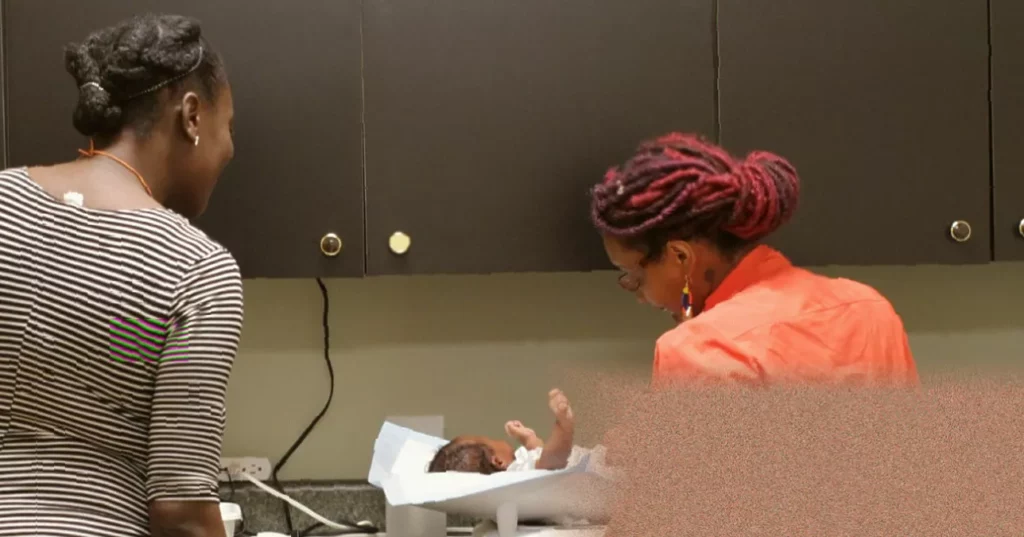
In Georgia, a licensed and nationally accredited midwife can run a freestanding birth centre but is forbidden by law from providing routine clinical care to the very clients who walk through its doors. This is the extraordinary position of Tamara Taitt, the executive director of the Atlanta Birth Center, who could face criminal charges for doing the job she is trained to do.
A Legal Challenge to ‘Outlier’ Restrictions
Last week, this contradiction was placed before a court. On April 2, 2026, the Center for Reproductive Rights filed a lawsuit in Fulton County Superior Court on behalf of Taitt and two other midwives, arguing that Georgia’s restrictive midwifery laws exacerbate a dire maternal health crisis and violate constitutional rights. The suit, announced on the final day of a legislative session that saw the failure of a midwifery decriminalisation bill, HB520, seeks to overturn decades of constraint.
The plaintiffs argue the state’s framework violates the right to pursue a chosen profession, makes a nurse-midwife’s ability to work dependent on private physicians’ approval, and improperly delegates governmental power. They also contend the laws are unconstitutionally vague and burden patients seeking out-of-hospital births without a safety-based rationale.
The Twin Barriers Blocking Midwifery Care
Georgia’s restrictions operate on two levels, effectively sidelining two distinct types of skilled professionals. First, it criminalises direct-entry midwives like Tamara Taitt and fellow plaintiff Jamarah Amani. These are midwives, including Certified Professional Midwives (CPMs), who enter the field through training and apprenticeship rather than a nursing degree. Despite being licensed to practice in 39 other states, they have no legal pathway in Georgia. State law threatens fines of up to $1,000 or imprisonment for anyone practising midwifery without a nursing license, meaning Taitt cannot legally “catch” babies, take vital signs, or conduct prenatal visits at her own centre.
The second barrier targets Certified Nurse-Midwives (CNMs), who are licensed nurses with advanced midwifery training. Plaintiff Sarah Stokely is a CNM licensed in Georgia, but state law requires her to operate under a formal, written collaborative agreement with a physician. These agreements, which plaintiffs say can cost around $1,000 per month, are often difficult to secure and financially untenable for independent practice. This requirement limits CNMs from working to the full scope of their training, including prescribing medications autonomously. As a result, Stokely commutes two hours north to practise in Tennessee, where oversight rules are less restrictive.
A Crisis Compounded by Exclusion
These restrictions are not abstract legalities; they bind a state in the grip of a maternal health emergency. According to state and federal data, Georgia had the second-highest maternal mortality rate in the US in 2021, at 66.3 deaths per 100,000 live births—nearly double the national average. The crisis is starkly racialised: between 2018 and 2020, pregnancy-related deaths for non-Hispanic Black women were 48.6 per 100,000 live births, compared to 22.7 for non-Hispanic white women. An estimated 85% of these deaths are deemed preventable.
Access to any care is itself a struggle. More than half of Georgia’s counties are classified as “maternity care deserts,” lacking obstetric providers or birthing facilities, a problem worsened by the state leading the nation in rural hospital closures. Since 1994, over 40 labour and delivery units have shuttered. In this context, advocates argue that barring qualified midwives is an act of profound self-sabotage. “The state of Georgia is not expanding access to care,” said Angela Aina, executive director of the Black Mamas Matter Alliance, at the lawsuit’s announcement. “It is actively blocking trained, qualified midwives from practicing.”
A Historical Legacy of Control
The systematic exclusion of midwives, particularly Black midwives, is deeply rooted in Georgia’s history. A century ago, approximately 9,000 traditional midwives, often called “granny midwives,” served families across the state. Research from the Black Mamas Matter Alliance details how, in the early 20th century, white progressive reformers—deeming midwives “unsanitary and superstitious”—began pushing for tighter regulations. Federal legislation like the 1921 Sheppard-Towner Act enacted stricter licensing, and by 1941, the number of practising midwives had dwindled to just over 2,000.
Advocates like Aina see this history as one of control, not safety. “Black midwives are the original maternity care providers in this country,” she said. “They sustained entire communities, and they were systematically excluded through regulations that were never about safety. They were about control.” This legacy echoes today, as community midwives like Sekesa Berry, who primarily serves Black women, report clients calling her because they fear unnecessary medical intervention in hospitals. “My most common phone call, specifically since the pandemic, is: ‘I don’t want to die,’” Berry said.
Contested Ground: Safety, Autonomy, and Global Standards
The battle in Georgia reflects a broader national conflict over midwifery’s role. Major medical organisations defend restrictions as safeguards. The American Medical Association has voiced strong opposition to expanding non-physicians’ scope of practice. Meanwhile, the American College of Obstetricians and Gynecologists and the American Academy of Pediatrics jointly support midwife-assisted birth but do not endorse care by midwives not certified by the American Midwifery Certification Board, which excludes many direct-entry practitioners.
This stance contrasts sharply with international guidance and evidence from other states. The World Health Organization urges countries to expand midwifery care, estimating that universal access could prevent over 60% of maternal and newborn deaths. Research also indicates that US states with laws supporting autonomous midwifery practice have larger midwife workforces, more midwife-attended births, and better outcomes, including lower rates of caesarean delivery and preterm birth. Notably, most states bordering Georgia offer some licensure pathway for direct-entry midwives, highlighting Georgia’s outlier status.
For the plaintiffs, the personal and professional toll is daily reality. Jamarah Amani, a direct-entry midwife who now practices in Florida after a distressing hospital birth experience in Georgia, said she was bringing the lawsuit “for every Georgian who has called asking me to be their midwife and who I’ve had to turn down.” Tamara Taitt, overseeing a centre whose clients she cannot touch, summarised the profound waste: “Instead, Georgia is choosing to leave a skilled, committed workforce on the sidelines even as communities struggle to access care.” The state now has 30 days to respond to the suit.