

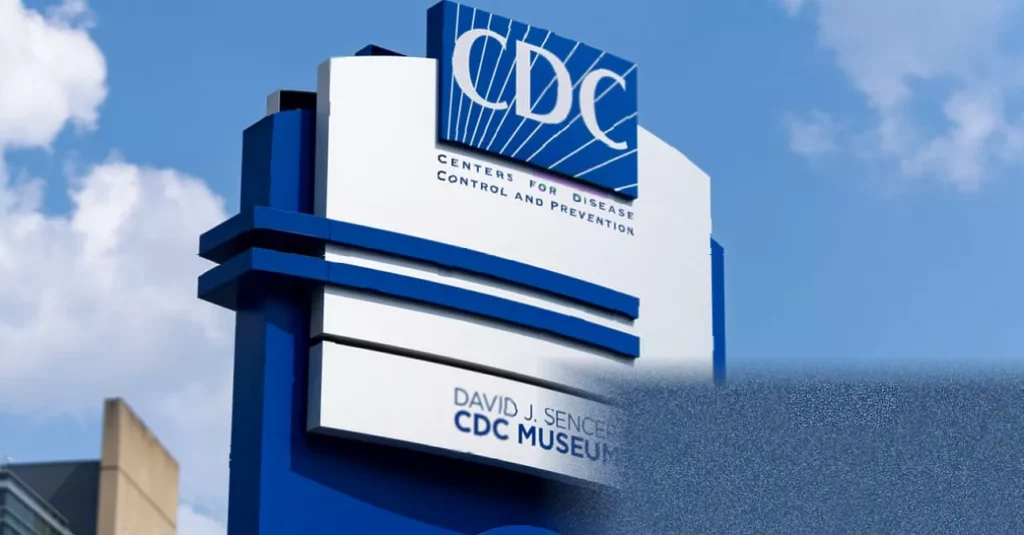
Fourteen months into a deeply contentious tenure by Health Secretary Robert F. Kennedy Jr., the United States’ premier public health agency is being hollowed out from the top down. Eighty percent of the top director positions at the Centers for Disease Control and Prevention (CDC) are vacant, leaving critical national health programmes adrift and raising alarms about the country’s preparedness for future crises.
An Agency Rudderless at the Top
The leadership vacuum starts at the very pinnacle. For eight months, the CDC has operated without a permanent director. The last Senate-confirmed chief, Susan Monarez, was fired by Mr Kennedy in August 2025 after less than a month, with her lawyers stating she was targeted for refusing “unscientific, reckless directives.”
Since then, leadership has been a game of musical chairs. Jim O’Neill, a former investment executive with no medical background, served as acting director until February 2026. He was followed by Dr Jay Bhattacharya, the head of the National Institutes of Health (NIH), who doubled up in the role until hitting a term limit. The agency’s website now lists him only as “performing the delegable duties” of the director.
On Thursday, former President Donald Trump moved to address the most glaring gap by nominating Erica Schwartz, a former deputy surgeon general and a rear admiral in the U.S. Coast Guard, as the new CDC director. Her appointment, alongside nominations for two top deputies, requires Senate confirmation. Should she be confirmed, Ms Schwartz, a vocal vaccine supporter with experience in pandemic influenza policy, will inherit an agency in profound disarray.
A Crawling Pace and Critical Blind Spots
The impact of so many vacant leadership posts is crippling the CDC’s daily functions and long-term mission. Current and former senior officials describe productivity slowing to a crawl amid bureaucratic delays and backlogs. One anonymous employee with decades of experience told the Guardian that even minor decisions, like approval for staff to travel within their state, must now be escalated to the Health Secretary’s office, a process that can take months.
“There’s nothing more demoralizing than not being able to do our work,” the employee said. “That’s why we choose to be here, to make the public’s health better, but everything has ground to a halt.”
The agency is also losing its eyes on public health. Breaks in data collection have left it “flying blind” in critical areas such as infant and maternal mortality. A key pregnancy monitoring system, known as Prams, has been specifically undermined. The project’s website now carries a disclaimer imposed by Mr Kennedy’s political appointees stating: “This page does not reflect reality and therefore the administration and this department reject it.”
Karen Hacker, the former director of the CDC’s national center for chronic disease prevention who quit last July, said targeting such programmes means officials no longer know what is happening on the ground. Her former centre, which manages a $1.4bn budget for programmes tackling diabetes, heart conditions, and cancer screening, has lost a third of its 1,000 staff and has several leaderless divisions.
The erosion of scientific oversight is equally stark. Dr Debra Houry, who resigned as chief medical officer in August, had final say over the CDC’s flagship publication, the Morbidity and Mortality Weekly Report (MMWR). With her position empty and editorial staff in turnover, the publication known as the “voice of CDC” is in danger of losing its scientific credibility. “You need someone with a science – not political – background to review these things,” Dr Houry said.
The Politicised Core of the Crisis
This operational paralysis stems directly from a politicised approach to public health, according to a wave of former leaders who resigned in protest. Dr Daniel Jernigan, former director of the national center for emerging diseases, Dr Demetre Daskalakis, the former vaccine chief, and Dr Houry all left in August 2025. They cited Mr Kennedy’s censorship of science, the politicisation of processes, and what Dr Daskalakis called the “ongoing weaponizing of public health.”
At the centre of the controversy is Mr Kennedy’s longstanding vaccine skepticism. Under his watch, the number of diseases on the childhood vaccine schedule was reduced—a move temporarily blocked by a judge—and half a billion dollars was cut from mRNA vaccine research. The CDC has also been directed to investigate a debunked link between vaccines and autism.
Most significantly, Mr Kennedy fired the entire 17-member Advisory Committee on Immunization Practices (ACIP) in June 2025, replacing it with a hand-picked panel aligned with his views. A judge has also temporarily blocked that move as unlawful, leaving U.S. vaccine policy in limbo and decisions on Covid-19 and flu shots on hold.
The consequences are already visible in public health outcomes. In testimony to Congress, Dr Houry noted that 270 children died of influenza-related conditions in the 2024-25 season, the highest pediatric death toll in a non-pandemic year in over two decades. Measles cases, she said, are at a 30-year high.
Trust in the agency has “plummeted,” according to observers, a situation compounded by an August 2025 shooting at its Atlanta headquarters, which some blamed on anti-vaccine rhetoric. With CDC databases faltering, states and medical societies have begun forming a “shadow CDC” to fill the information vacuum.
Emily Hilliard, press secretary for the Department of Health and Human Services, defended the administration’s record, stating the CDC has been returned to its “core mission of fighting infectious disease” under Mr Kennedy and Dr Bhattacharya’s leadership.
Yet for the staff who remain, the atmosphere is one of deep uncertainty. “Staff are completely demoralised by the lack of leadership and vision, and work is more or less at a standstill,” said the anonymous CDC employee. As one former official, Abby Tighe, put it, the vacancy of senior posts has dissolved checks and balances, leaving Mr Kennedy surrounded by political appointees and resulting in “unregulated power” over American public health.