

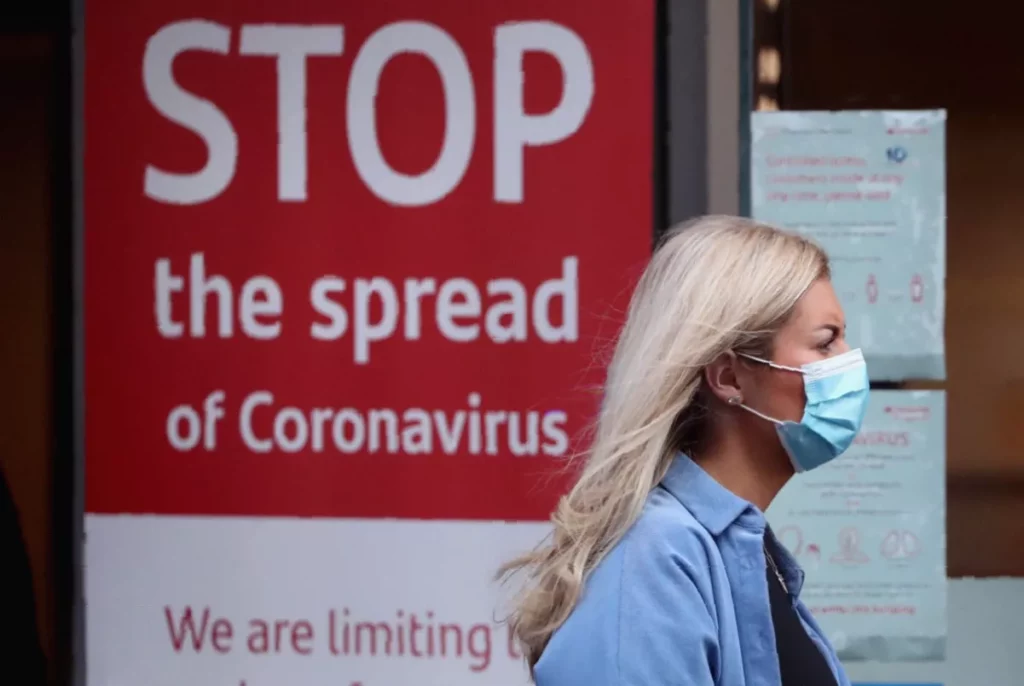
A new Covid variant, BA.3.2, has been identified in the UK and is being closely monitored by health authorities, raising fresh questions about the virus’s evolution and the ongoing effectiveness of vaccines.
Variant’s Detection and Global Footprint
The UK Health Security Agency (UKHSA) confirmed it is tracking BA.3.2 as part of its routine surveillance. The variant has been designated a ‘variant under monitoring’ by the World Health Organization (WHO), a status it received on December 5, 2025. This classification signals that the strain possesses genetic changes which may require prioritised attention.
BA.3.2 is a descendant of the Omicron BA.3 lineage, which itself caused a significant wave of cases in the UK in late 2021. It was first identified globally in a sample from South Africa on November 22, 2024, with analysis suggesting it actually emerged sometime between December 2023 and July 2024. After a period of being largely undetected—earning it the researcher nickname “Cicada”—its presence grew more apparent from September 2025 onward.
As of February 2026, it has been reported in at least 23 countries across Africa, Asia, Europe, North America, and Oceania. Its detection in the United States provides a stark illustration of its spread: it was first found there on June 27, 2025, in a traveller from the Netherlands, and has since been identified in nasal swabs from four travellers, clinical samples from five patients, three aeroplane wastewater samples, and 132 wastewater surveillance samples across 25 states. In parts of Europe, including Denmark, Germany, and the Netherlands, it has made up a significant proportion of sequenced cases, though it has not rapidly overtaken other circulating variants.
Genetic Changes and Vaccine Efficacy Concerns
The primary focus for scientists lies in the variant’s extensive genetic makeup. Researchers at the US Centers for Disease Control and Prevention (CDC) have warned that BA.3.2 is “genetically distinct” from the JN.1 lineages that have been predominant. Its key feature is an unusually high number of mutations in the spike protein—the part of the virus that allows it to enter human cells.
Compared to the JN.1 lineage and the LP.8.1 variant used in the latest vaccines, BA.3.2 carries approximately 70 to 75 substitutions and deletions in its spike protein gene sequence. This dense cluster of mutations is what raises concerns about increased immune evasion, potentially making it easier for the virus to bypass defences built up from prior infection or vaccination.
Laboratory studies cited by the CDC indicate this theoretical risk may be borne out in practice. The 2025–2026 LP.8.1-adapted mRNA Covid-19 vaccine, which provides protection against currently predominant strains, demonstrated the lowest antibody neutralisation against BA.3.2 in a study of seven variants. This suggests that while the vaccine is still expected to guard against severe disease, its ability to prevent infection from BA.3.2 specifically may be reduced. The CDC notes that strengthening immunity against such variants may therefore require further vaccine refinement in future.
Expert Reassurance on Severity and Risk
Despite its genetic divergence and potential to evade antibodies, multiple health agencies and independent experts have sought to temper concerns about the immediate threat posed by BA.3.2. The UKHSA states there is currently no evidence the variant causes more severe illness or is more transmissible than other recent strains.
This assessment is echoed internationally. The WHO’s Initial Risk Evaluation Report from December 2025 concluded that BA.3.2 has not shown a sustained growth advantage over co-circulating variants and that no data indicates increased severity, hospitalisations, or deaths. In the US, all five patients from whom clinical samples were taken survived, including hospitalised older adults with underlying conditions and a young child. Phenotypic data also suggests BA.3.2 may have reduced infectivity compared to some other circulating lineages.
Professor Ian Jones, a virologist at the University of Reading, suggested that a rise in hospital cases would be the key indicator of increased danger. “We can expect constant evolution to facilitate transmission but unless there is a rise in hospital cases there is no reason to suppose any new variant is more ‘dangerous’,” he said. He also noted that any decision to update a vaccine formula may be “more a commercial than a scientific decision,” driven by uptake rather than every genetic shift.
Epidemiologist Professor Paul Hunter of the University of East Anglia added that new variants are an expected part of the virus’s lifecycle. “We will continue to see new variants of the virus as long as humans still inhabit the planet,” he said, emphasising that increased infection rates from a competitive variant do not automatically translate into a substantial additional burden of disease.
The UKHSA’s Dr Nick Machin confirmed the agency is undertaking an assessment of the variant’s impact on diagnostic test performance. The overall consensus from health bodies is that while BA.3.2 underscores the need for continued genomic surveillance—including tools like wastewater testing and traveller screening—it currently poses a low additional public health risk compared to other Omicron descendants in circulation.