

With crucial midterm elections approaching, senior US health officials are conspicuously softening their once-vocal criticisms of routine vaccinations, a strategic pivot informed by internal polling that suggests anti-vaccine views are a political liability.
The Political Calculation Behind a Public Retreat
The shift appears deliberate and politically motivated. Polling data from December, analysed by Tony Fabrizio and Bob Ward in the 35 most competitive congressional districts, revealed strong bipartisan support for childhood vaccines. Crucially, they found this sentiment held even within the conservative “Make America Healthy Again” (MAHA) movement, with most of its voters rejecting changes to immunisation schedules. Their conclusion was stark: “skepticism toward vaccine requirements is politically risky for both parties”.
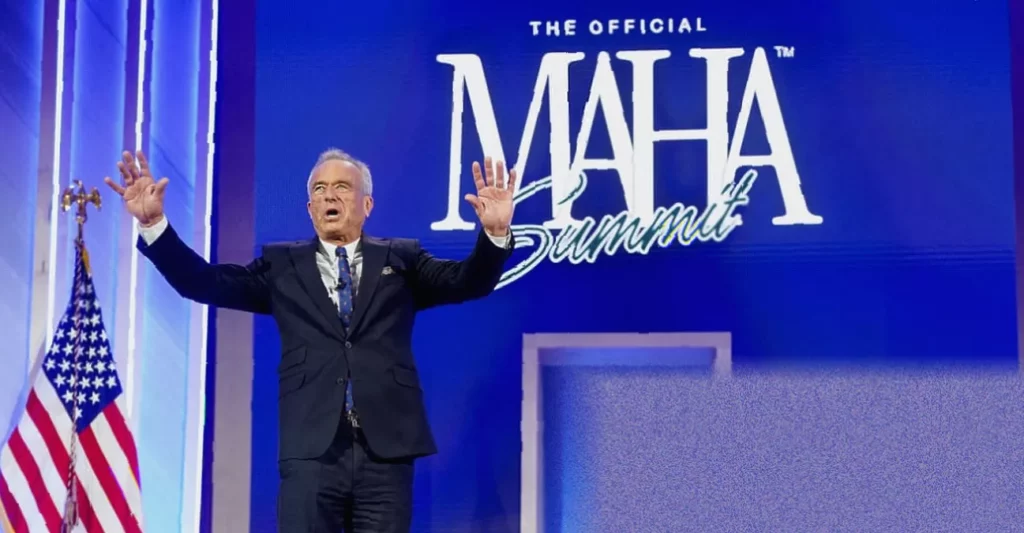
This data seems to have influenced a marked change in rhetoric from key figures. Health and Human Services (HHS) Secretary Robert F. Kennedy Jr., a long-time vaccine opponent, delivered a 30-minute speech at the Conservative Political Action Conference (CPAC) in March without explicitly mentioning immunisations once. When asked what advice he had for “MAHA parents,” he pivoted to cell phones and social media as the biggest threats, a significant departure from his decades of focus on vaccines.
“My perception is absolutely that messaging has gone out to downplay anti-vaccine messaging,” said Elizabeth Jacobs, an epidemiology professor at the University of Arizona and a founding member of the advocacy group Defend Public Health. “It seems like somebody has advised him to stop doing anti-vaccine stuff.”
Quiet Policy Overhauls Amid Loud Silence
Despite the public reticence, the administration has enacted profound changes to the nation’s vaccine framework. In January 2026, the Centers for Disease Control and Prevention (CDC) announced a sweeping overhaul of the childhood immunisation schedule, slashing the number of universally recommended vaccines from 17 to 11 diseases.
The new schedule, which the CDC says is focused on individualised care, categorises vaccines into three tiers. Only 11 diseases are now recommended for all children, while shots for COVID-19, flu, and rotavirus are relegated to “shared clinical decision-making”. Vaccines for Hepatitis B at birth, Hepatitis A, and RSV are now only for high-risk individuals. These changes have proven deeply controversial. At least 28 states and Washington D.C. have said they will not fully follow the new CDC guidance, with many adhering instead to the American Academy of Pediatrics, which has labelled the changes “dangerous and unnecessary“.
Katelyn Jetelina, founder of Your Local Epidemiologist, characterised the administration’s health approach as chasing “headline wins” rather than getting to the “root cause”. This “root cause” language is central to the MAHA initiative’s focus on nutrition, food quality, and environmental hazards. FDA Commissioner Marty Makary, confirmed in March 2025, has echoed this, emphasising modernising regulation and tackling underlying health drivers.
Controversy, Coded Language, and Unabated Activism
Despite the public downplaying, Kennedy’s core ideology surfaces in coded terms. At CPAC, he spoke of a “chronic disease crisis” and a mysterious deterioration in children’s health since 2005—the year he penned “Deadly Immunity,” a since-retracted article for Rolling Stone and Salon alleging a vaccine-autism link. “I never knew anybody with autism,” Kennedy said. “Suddenly they’re everywhere.” He did not acknowledge improved diagnosis and community support as factors in the increased recognition of autism.
Jay Bhattacharya, Director of the National Institutes of Health (NIH), mentioned vaccines only once at CPAC—to highlight research into a shingles vaccine’s potential link to reduced Alzheimer’s risk. He too echoed Kennedy’s rhetoric on a “chronic disease crisis,” a phrase Kennedy often uses as a proxy for autism.
The administration also faces internal fractures. MAHA loyalists were thrown into tumult earlier this year when President Trump signed an executive order to increase production of glyphosate, the herbicide in Roundup. Kennedy, who once helped win a judgment against its maker Monsanto, defended the order on national security grounds, drawing backlash from environmental activists.
Meanwhile, hardline anti-vaccine activists, sensing opportunity, have become more vocal. Mark Gorton, president of the MAHA Institute, called in March for the elimination of the entire childhood schedule. Del Bigtree, a prominent activist and Kennedy ally, told supporters “We’re winning,” urging them to be “loud and more proud than you’ve ever been”.
This creates a dangerous dichotomy: while officials mute their criticism for electoral gain, the misinformation ecosystem they helped foster continues unabated. The result, experts warn, is declining vaccination coverage and resurgent preventable diseases. “We are going to lose lives over this,” said Jetelina. “We are going backwards on a lot of things, and we don’t have time to be spinning our wheels.”