

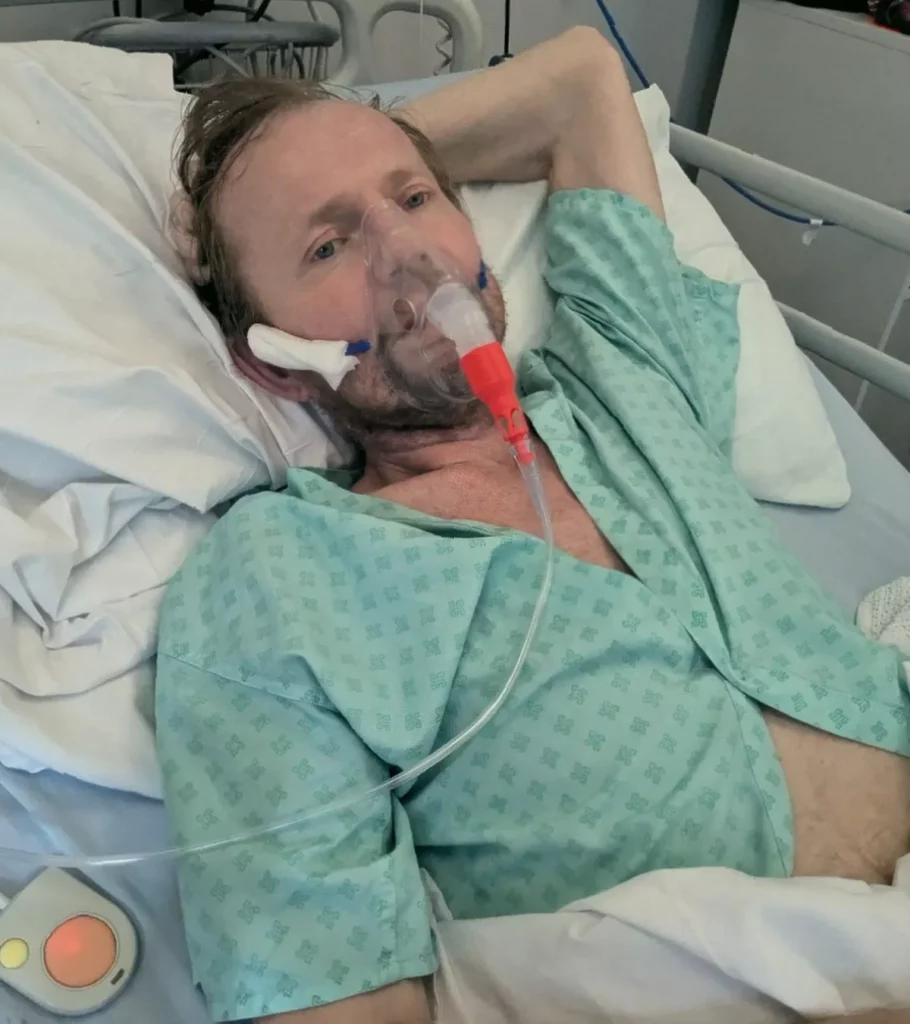
Young kitchen workers are dying from a lung disease that could be caught earlier if a workforce screening programme existed, doctors and health officials have warned. Without such a programme, experts predict more lives will be lost to silicosis – an incurable and progressive condition caused by inhaling fine silica dust during the cutting and polishing of engineered stone kitchen worktops.
Since the first UK cases linked to artificial stone emerged in mid-2023, more than 50 men – most in their 20s and 30s – have been diagnosed with silicosis at London’s Royal Brompton Hospital, the country’s main specialist centre for the disease. At least four have died. The youngest patients are in their early twenties, and the average age of those affected is 34. Many are foreign-born and have had shorter exposure histories, suggesting an unusually aggressive form of the illness.
“You have people who are diagnosed with sarcoidosis by respiratory clinicians who we need to try and increase awareness about how similar sarcoidosis and silicosis are,” said Dr Jo Feary, a consultant in occupational lung disease at the Royal Brompton, where she treats new patients every month. She expects the caseload to grow.
Why silicosis is being mistaken for sarcoidosis
One of the gravest obstacles to early diagnosis is that silicosis is easily confused with sarcoidosis, a rare immune system disorder that frequently begins in the lungs and lymph nodes. Both conditions can appear as nodules or scarring on chest X-rays and CT scans, and early symptoms – shortness of breath, a persistent cough, fatigue – overlap so closely that even respiratory specialists have misidentified them.

In a recent paper examining 32 UK patients with quartz-induced silicosis, Dr Feary and fellow respiratory doctors described how cases were going unrecognised because of asymptomatic early disease, inadequate screening, a lack of awareness among medics, and the disease being mistaken for sarcoidosis. Of the 19 patients referred to the Brompton’s occupational lung disease clinic from respiratory specialists, seven had been treated for sarcoidosis for between six months and five years before their correct diagnosis was made. Fifteen of the 32 cases already showed signs of acute and accelerated silicosis, indicating very high exposure to silica dust.
The confusion is compounded because silicosis can also mimic tuberculosis and other more common respiratory conditions. GPs, who are often the first point of contact, may dismiss symptoms as asthma, smoking-related illness, or a chest infection. “Most GPs don’t think about silicosis as being something that affects young men and young people,” said Professor Neil Greenberg, president of the Society of Occupational Medicine. “If someone comes in and they’re talking about asthma symptoms or smoking-related symptoms, the GP might just write it off as that when actually, underneath it all, it is because they’ve been working with these kitchen tops.”
Professor Victoria Tzortziou Brown, president of the Royal College of GPs, acknowledged that diagnosing less common respiratory conditions in general practice is challenging, as early symptoms can overlap with more common illnesses. She said the GP curriculum stresses the importance of taking a patient’s occupational history alongside smoking and other “red-flag symptoms”. Dr Feary emphasised that she had “no evidence to say that GPs are missing things” and that the issue is wider.
The story of Ryan Fenton illustrates the diagnostic trap. The 47-year-old was diagnosed only after suffering a mini-stroke in December 2022. Doctors initially told him he had sarcoidosis, but a biopsy sent to the Royal Brompton confirmed silicosis.

Calls for a screening programme grow louder
Experts argue that a properly designed screening programme would catch cases before irreversible lung damage sets in. Dr Feary said: “Anything that would help detect early disease, I would welcome and that would include a screening programme. I think it would need to be carefully designed so it wouldn’t necessarily be what they did in Australia, and I don’t know what it would look like, but I feel that something like a screening programme could be really useful.”
Australia’s experience is instructive. Since 2015, around 1,000 stonemasons there have been diagnosed with silicosis, prompting the country to become the first in the world to ban engineered stone – which can contain more than 90% silica, far higher than natural granite (15-30%) or marble (around 3%). As part of regional government-funded screening programmes, silica field teams went on the road to identify small workplaces, leafing through old Yellow Pages, scouring the internet and knocking on doors in an “enforcement blitz”, according to Dr Ryan Hoy, whose research team at Melbourne’s Monash University helped develop Victoria’s state screening programme.
In the UK, of more than 50 patients Dr Feary has treated, only two had access to occupational health. Many of the men described working for companies that flouted safety measures such as using water suppression during cutting. “So if we want to detect early disease, then we need to think about a way to do that that doesn’t just involve occupational health screening or occupational health surveillance,” Dr Feary said. “From a pragmatic point of view, a screening programme would be the way to detect those patients.”
Professor Greenberg backed the call and urged the government to mandate occupational health provision for all workers in the industry, similar to the requirement for those who work with asbestos. “If you’re working in an industry that uses asbestos, you have to have occupational health professionals advise you and do the surveillance. And so we would say, because the kitchen countertop industry is one which exposes people to the risk of a serious illness – silicosis, it’s like asbestos – there should be similar mandates that they must have access to occupational health.” He also called for an education campaign aimed at GPs to improve recognition.

The Health and Safety Executive (HSE) has updated its guidance on health surveillance for workers exposed to respirable crystalline silica and highlighted worktop manufacturing and installation as high-risk occupations. Under the Control of Substances Hazardous to Health (COSHH) Regulations, employers are already required to control exposure. Critics argue that current UK guidance, which recommends monitoring workers after 15 years, is far too late to catch the rapid-onset disease now being seen in young men.
Some companies are taking independent action. Herringbone Kitchens, a UK kitchen company, banned high-silica engineered stone from February 2024, setting its silica content benchmark to Australia’s lower levels and advocating for a nationwide ban. The company has stressed that installed worktops pose no risk to clients; the danger lies in the fabrication and cutting stages.
A spokesperson for the Department for Work and Pensions (DWP) said silicosis “remains a ministerial priority”, adding that strong laws already exist to protect workers from hazardous substances such as artificial stone. “We support the Health and Safety Executive to ensure silicosis remains a priority in their regulatory work,” the spokesperson said.