

The World Health Organization is facing the loss of more than a quarter of its staff by the end of June, a drastic reduction that experts warn will leave the world vulnerable to future pandemics. Out of a planned workforce of 9,401 for 2025, approximately 2,400 posts are being eliminated, shrinking the UN health agency to its smallest size in 15 years.
The unprecedented cuts are the direct result of a severe funding crisis, triggered primarily by the withdrawal of the United States. President Donald Trump initiated the US exit with an executive order on 20 January 2025, citing the WHO’s handling of the Covid-19 pandemic, a lack of reforms, and insufficient transparency. The formal withdrawal took effect on 22 January 2026, terminating all US government funding and creating an estimated $1.05 billion budget gap for the 2026-2027 period. Prior to its exit, US funding suspensions had already disrupted critical programmes tackling HIV, polio, and mpox.
Argentina has followed suit, with President Javier Milei’s government citing profound differences in health management and the “politicisation” of the organisation during the pandemic. Argentina’s departure became official on 17 March 2026. While its assessed contribution was a relatively modest $8 million, its exit alongside America’s signifies a troubling retreat from multilateral health cooperation.
A cascade of cuts undermining global defence
The haemorrhaging of expertise and institutional capacity at the WHO comes at a moment of profound global strain. The agency’s capability is already stretched thin by major conflicts in Gaza, Sudan, Ukraine, and Iran—which are creating massive health crises for displaced populations—and by specific preparations for potential “mass casualty” events linked to the conflict in Iran. Against this backdrop, the staff reductions threaten to cripple the world’s first line of defence against emergent diseases.
WHO Director-General Dr Tedros Adhanom Ghebreyesus described 2025 as “undeniably one of the most difficult years in our Organization’s history,” forced into cuts by a “significant” funding shortfall. The consequences are being felt most acutely in low- and middle-income countries. External health aid is projected to drop by 30-40% from 2023 to 2025, reaching decade lows. A survey of 108 such countries found critical services—including disease surveillance, maternal care, and vaccination—reduced by up to 70% in some areas, with over 50 nations reporting job losses among health workers.
This degradation of frontline systems directly increases global pandemic risk. The WHO’s core function of detecting and verifying outbreaks early is being systematically weakened. Last year alone, the agency assessed some 500 health threats and 50 emergencies worldwide; a decimated workforce will struggle to maintain this vigilance. Adrian Lovett, UK executive director of the advocacy group the ONE Campaign, stated that weakening the WHO’s capacity for early detection and coordination “risks leaving us dangerously exposed to the next pandemic.”
Compounding risks from key allies
The crisis is compounded by parallel cuts from traditional donor nations. The UK government, under Prime Minister Keir Starmer, has reduced its aid budget from 0.5% to 0.3% of Gross National Income to fund increased defence spending. Analysis by the ONE Campaign suggests that combined UK cuts to Gavi, the Vaccine Alliance, and the Global Fund to Fight AIDS, Tuberculosis and Malaria could result in 600,000 fewer lives saved over five years. Previous UK aid reductions have had fatal consequences, including the closure of health facilities in South Sudan and ambulances running out of fuel in Sierra Leone.
These funding collapses are having tangible, devastating effects on specific life-saving programmes. Tanya Chinowaita of the global health organisation Results UK warned that cutting the infrastructure for disease surveillance or polio vaccination “costs lives.” She noted that polio eradication, now within reach, depends on strong country programmes and consistent delivery now being scaled back. “These decisions mean that more children risk paralysis and death,” she said.
The staff cuts at headquarters in Geneva are being felt disproportionately in regional offices, with the African region losing 638 posts. Pete Baker of the Center for Global Development said the inevitable loss of expertise “will leave the world less healthy and less safe from outbreaks and pandemics, and less able to collectively respond to crisis.”
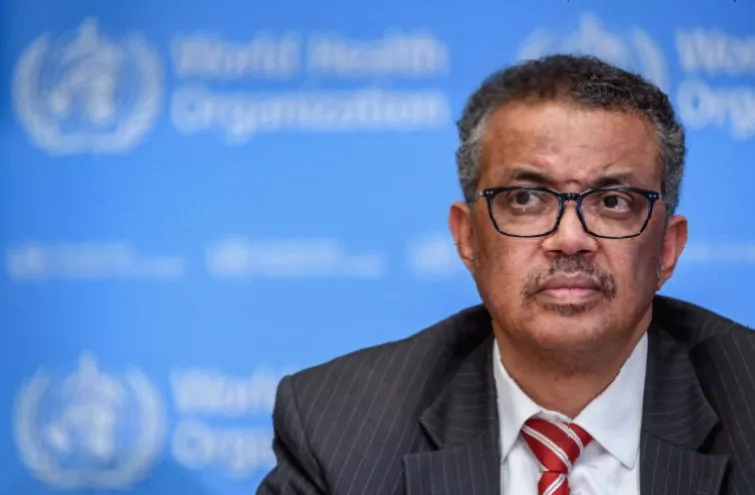
Some observers see a forced opportunity for reform. Professor John Ashton, a former UK public health president, noted the WHO is an organisation that builds consensus, not a health authority with power over states. Both Dr Tedros and external analysts like Baker have suggested the crisis could forge a “leaner WHO” focused on its unique global role rather than trying to “do everything everywhere.” The agency is now pushing for greater mandatory assessed contributions from member states to achieve financial stability, while guiding countries on transitioning to sustainable domestic health financing.
Nevertheless, with a planned budget of $4.2 billion for 2026-27 still facing a $1.7 billion shortfall, and morale within the agency described as “very low,” the immediate outlook remains one of severely diminished capacity. The organisation finds itself, as Professor Ashton observed, “between a rock and a hard place,” tasked with safeguarding global health with dramatically fewer resources as threats continue to multiply.