

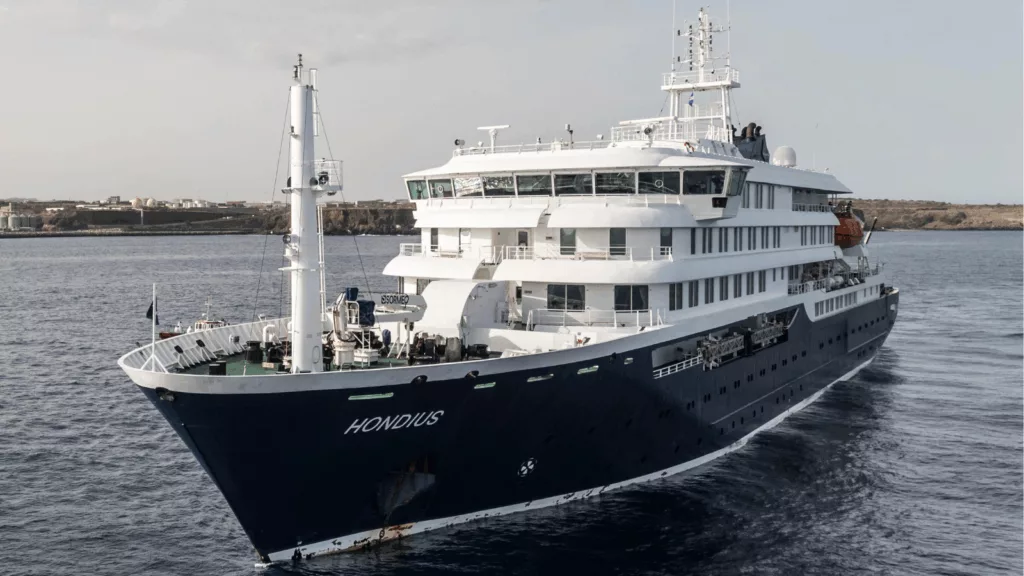
A cruise ship stricken by a hantavirus outbreak is now sailing towards the Canary Islands after three people were evacuated from the vessel and three deaths were recorded during the transatlantic voyage, Spanish authorities have confirmed.
The Dutch-flagged expedition ship MV Hondius, which has 149 passengers and crew aboard, is expected to dock in either Gran Canaria or Tenerife within three to four days, according to the vessel’s operator, Oceanwide Expeditions. The ship had been travelling from Ushuaia, Argentina, on a 35-night “Atlantic Odyssey” itinerary that included stops in Antarctica, the Falkland Islands and was originally due to end in Cape Verde. However, after the outbreak became apparent, Cape Verde authorities determined the islands lacked the necessary medical infrastructure to manage the situation, prompting Spain to step in.
Spanish health ministry officials have confirmed that all contact with those disembarking from the MV Hondius will take place in specially designated facilities and vehicles set up for the emergency operation. The measures are intended to avoid contact with local residents and protect medical teams responding to the outbreak. Spain’s health ministry said the Canary Islands were the nearest suitable location, adding the country had “a moral and legal obligation to assist these people, among whom are several Spanish citizens”.
Outbreak cases and fatalities
The World Health Organization (WHO) has reported seven hantavirus cases linked to the outbreak so far: two laboratory-confirmed infections and five suspected cases. Among the three deaths recorded during the voyage, one is a Dutch woman whose infection was confirmed. Her husband, a 70-year-old Dutch man who developed respiratory distress and died on board on April 11, has not officially been confirmed as a hantavirus-related death. The couple had been among the first to fall ill; the husband’s body was disembarked on St Helena on April 24, and his wife, who accompanied him, later died in South Africa where her blood tested positive for the virus.
A German passenger who died on May 2 has also not been classified as a confirmed hantavirus case. The second confirmed case involves a 69-year-old British passenger who was evacuated to South Africa for treatment and is currently in intensive care. A third person linked to the deceased German passenger is also expected to be evacuated. Among those still on board are 23 British nationals, including 22 passengers and one crew member awaiting medical evacuation. Two crew members require urgent medical treatment, including the ship’s doctor, who is said to be in a serious condition and was due to be flown to the Canary Islands on Tuesday aboard a medical aircraft.
How hantavirus spreads and the protocols in place
Hantaviruses are a group of viruses carried by rodents, primarily spread through inhaling air contaminated with virus particles from rodent urine, droppings or saliva. Infection can also occur through contact with contaminated surfaces, cuts, the eyes, or, rarely, a rodent bite. Symptoms typically appear one to eight weeks after exposure and include fever, fatigue, muscle aches, headache, nausea, vomiting, diarrhoea and abdominal pain. In severe cases, Hantavirus Pulmonary Syndrome (HPS) can develop, leading to rapid progression of breathing difficulties, fluid in the lungs, low blood pressure and irregular heart rate, which can be life-threatening.
The WHO has said it believes the virus may have spread through human-to-human contact on the ship. Although most hantavirus strains do not transmit between people, the Andes virus strain, prevalent in South America, has been known to pass from person to person through close contact. The specific strain involved in the MV Hondius outbreak has not yet been confirmed, and investigations are ongoing to determine if it is the Andes virus. There is no specific treatment, cure or vaccine for hantavirus infection; early recognition and intensive care treatment can improve the chances of recovery.
Spain’s health ministry has put in place strict health protocols for the ship’s arrival. All passengers and crew will undergo medical assessments and receive treatment where needed before being allowed to continue their journeys home. The measures include specialised transport and isolation facilities to minimise public contact and protect healthcare workers. The WHO is coordinating with Spanish authorities and the European Centre for Disease Prevention and Control (ECDC) for the management of the situation. A spokesman for the UK’s Foreign Office said: “We are closely monitoring reports of a potential hantavirus outbreak on the cruise ship Hondius and stand ready to support British nationals if needed. We are in touch with the cruise company and local authorities.”