

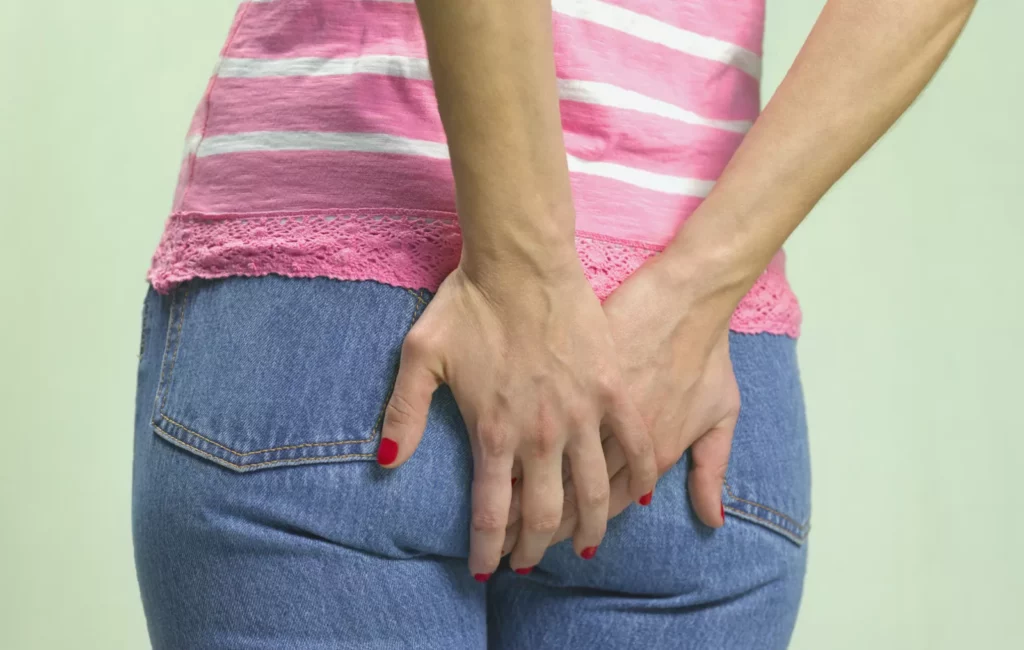
A social media user’s painful medical ordeal has sparked an online debate about underwear choices, with thongs being blamed by some for causing agonising cysts near the tailbone.
The discussion was ignited by a TikTok user, LaVashti, who filmed herself discarding all her thongs after what she described as a traumatic experience. She recounted being rushed for emergency surgery and spending six nights in hospital after a pilonidal cyst developed into an abscess that required surgical removal. Her video, aimed at raising awareness, prompted comments from others who called the condition “no joke” and the source of “the worst pain,” while many expressed surprise, having never heard of it.
What exactly is a pilonidal cyst?
Medical experts explain that a pilonidal cyst is a small pocket or tunnel that forms near the tailbone, typically containing hair and skin debris. The term itself means “nest of hair.” According to Dr Lawrence Cunningham, a GP, the body treats trapped hair as a foreign object, triggering inflammation that eventually develops into a cyst. Symptoms include pain, swelling, tenderness, and a visible cyst that may leak pus or blood, making sitting, walking, and sleeping intensely uncomfortable.
The condition is not new. During World War II, a high incidence among soldiers led to it being nicknamed “Jeep disease,” due to the perceived link with riding in bumpy vehicles. Today, it is estimated to affect approximately 26 in 100,000 people annually in the UK and is rare in children and people over 40.
How can a thong contribute to the problem?
While experts are clear that thongs are not the sole or direct cause, they can be a contributing factor for those already predisposed. Dr Cunningham explains the mechanism: the thin fabric strip of a thong creates friction and pressure in the natal cleft area—the groove between the buttocks. This constant rubbing irritates hair follicles and can lead to hairs becoming ingrown, setting the stage for a cyst to form. Tight-fitting thongs worn regularly are considered the main culprits in this context.
Sarah Mulindwa, a specialist sexual health nurse, corroborates that there is no strong evidence thongs directly cause pilonidal cysts. However, she notes that in some cases they could contribute to irritation in the area, which might play a small role for people already prone to them. The issue is one of friction and irritation, not a definitive causation.
This principle extends beyond thongs. Medical advice often suggests avoiding any tight clothing—including compression shorts, yoga leggings, and shapewear—that can cause similar pressure and friction in the area, especially after surgery.

Who is most at risk?
The demographic most commonly affected might surprise those blaming women’s underwear. Young adult males between 15 and 35 are the most frequently affected group, being three to four times more likely to develop a cyst than women, according to broader medical data. Dr Cunningham observes that men with thick or coarse body hair are particularly susceptible.
Lifestyle factors play a significant role. People who sit for extended periods, such as lorry drivers or office workers, are at higher risk due to the constant pressure on the area. Other risk factors include having a deep natal cleft, being overweight or obese, a family history of the condition, and previous occurrences—having one cyst makes you more likely to develop another.
Can thongs cause other health issues?
For most people, thongs pose no problem, but for some they can lead to other conditions. Nurse Mulindwa outlines several potential issues. The friction can cause simple skin irritation or chafing, especially if the fabric is rough or the fit too tight. More seriously, thongs can potentially transfer bacteria from the back to the front, increasing the risk of urinary tract infections (UTIs) or bacterial vaginosis. Yeast infections can also occur if the thong is made from non-breathable material that traps moisture.
Furthermore, the irritation can lead to ingrown hairs or folliculitis around the hair follicles. For those suffering from haemorrhoids, the fabric can aggravate sensitivity in the area, though it is unlikely to cause the condition itself.
Treatment for pilonidal cysts ranges from management of mild cases with cleanliness, warm compresses, and antibiotics, to surgical intervention for severe or recurrent cysts. Surgical options include drainage procedures or complete excision. For those determined to keep wearing thongs, Nurse Mulindwa advises a balanced approach: ensure the fit isn’t too tight, choose breathable fabrics like cotton, and avoid wearing them during workouts or on very hot days.