

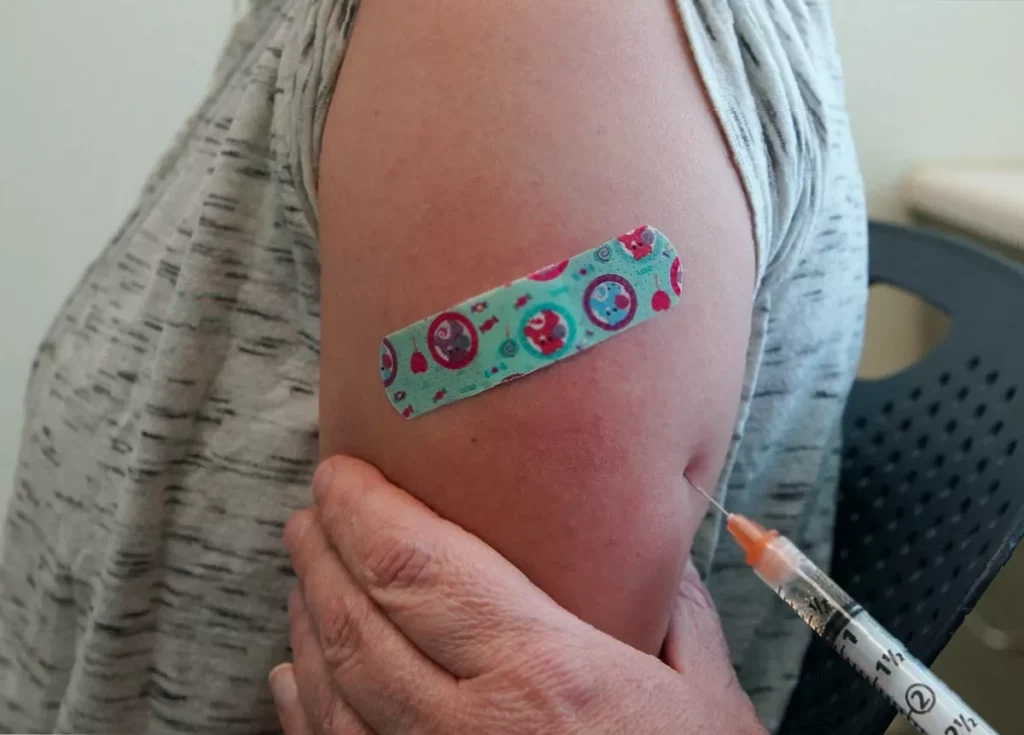
People who regularly turn to right-wing media for their news are more than twice as likely to be hesitant about vaccines, according to a major new survey from Johns Hopkins University. The findings, drawn from a sample of 2,970 American adults, reinforce a well-documented link between conservative media consumption and scepticism toward immunisation, even though the majority of respondents still believe the benefits of the measles-mumps-rubella vaccine outweigh the risks and only one in six described themselves as hesitant.
How non-authoritative sources drive vaccine hesitancy
The Johns Hopkins researchers found that the connection between media habits and vaccine attitudes was not simply a matter of political alignment. Adults who were hesitant about vaccines were significantly more likely to rely on non-authoritative sources for health information – a category that includes social media influencers, newsletters from the vaccine-sceptical non-profit Children’s Health Defense, and so-called “new right” outlets such as Breitbart, Newsmax and Zero Hedge. These sources, the study suggests, amplify doubt about vaccine safety and efficacy in ways that official public health messaging struggles to counter.
Misinformation about vaccines circulating through these channels has been cited by doctors as a factor fuelling the worst measles outbreaks in decades, as well as surges in paediatric measles, Covid and flu deaths. The impact of unflagged vaccine-sceptical content on social media has been estimated to be 46 times greater than that of flagged misinformation, according to prior research cited in the briefing. Vaccine scepticism has grown markedly over the past decade, accelerated by the Covid-19 pandemic and the rising profile of figures such as Robert F. Kennedy Jr., who founded Children’s Health Defense and later served as Secretary of Health and Human Services under President Trump, leading the “Make America Healthy Again” (MAHA) movement. The MAHA movement, which the study describes as characterised by science denialism and opposition to public health measures, was embraced by 43% of hesitant adults compared with 27% of non-hesitant adults.
Lauren Gardner, director of Johns Hopkins’ Center for Systems Science and Engineering, said in a statement: “Our work reveals a strong association between people’s specific media habits and their attitudes towards vaccination. Our findings suggest that when everyone is already engaging online, where and how they choose to do so matters.” The researchers acknowledged that it remains unclear how much participants’ beliefs may have been shaped by other factors such as religion or past experiences, but the strength of the association between media consumption and hesitancy was striking.
Demographic profile of the vaccine-hesitant
Vaccine-hesitant adults in the survey were more likely to be younger, parents, less educated, lower-income and from racial minority backgrounds. Nearly 40% identified with the Republican Party, while 33% described themselves as Independent. The study also noted that while overall news consumption was high – 87% of participants said they followed the news and nearly everyone was online at least once a day – there was a clear divergence in the sources chosen. Non-hesitant adults were less likely to seek out right-leaning new media channels and far less likely to obtain information from non-authoritative sources. In contrast, hesitant adults gravitated toward those same sources, suggesting that reliance on experts served as a protective factor against vaccine hesitancy.
A 2026 study mapping MMR vaccine uptake across the United States found that only 64% of children aged six months to five years had received the vaccine, well below the community immunity threshold of 92–94%. National coverage currently stands at 93%, short of the 95% needed to limit the spread of measles. Recent CDC data indicate a decline in routine vaccination coverage among kindergarteners for the 2024-25 school year, with exemption rates rising. Racial disparities persist, with Black and American Indian or Alaska Native children historically having lower vaccination rates, though recent declines have also been observed among White and Asian children.
Measles outbreaks and the public health response
The survey comes amid a resurgence of measles in the United States. The disease, which was declared eliminated in 2000, saw a historic influx of cases in 2025 – the most since elimination – with 2,288 confirmed cases across 45 jurisdictions. The majority of those infected were unvaccinated. As of April 2026, the largest single outbreak since 2000 was in South Carolina, with 997 cases. Officials there said that past outbreaks had actually led to increased vaccination rates that helped bring them under control. Dr. Brannon Traxler, deputy director and chief medical officer with the South Carolina Department of Public Health, said at a news briefing: “Vaccination – combined with other opportunities for good, solid public health work – really can be effective, even against some of the most contagious viruses.”
However, coverage nationwide remains uneven. Measles cases continue to spread in Utah, where 607 cases have been recorded – 514 of them in unvaccinated individuals, according to state data. Many of those cases have been linked to schools. While Utah requires public school students to have two doses of the MMR vaccine, parents may opt out for personal, religious or medical reasons. The state’s non-medical exemption rate among young children is already higher than the national average, according to the Johns Hopkins Bloomberg School of Public Health. The MMR vaccine is 97% effective against measles, a virus that can cause brain swelling and death, particularly in young children, and in 2025 the country recorded its first measles-related deaths in a decade – two fatalities among 378 cases reported across 17 states by March of that year.
What experts say must change
Amelia Jamison, an assistant research scientist at Johns Hopkins and co-first author of the study, said: “With public health becoming increasingly polarised, it’s critical to understand people’s attitudes about vaccines, and this work suggests people’s media preferences play an outsized role in influencing those attitudes.” The researchers argue that to improve vaccination rates, health communicators must shift focus away from simply countering misinformation and toward actively guiding the public on how and where to find reliable health information. Political polarisation around vaccine hesitancy during the Covid-19 pandemic was estimated to be 12 times greater than in past outbreaks, and distrust in government and health agencies is a significant factor, particularly in politically polarised contexts. The Johns Hopkins team said their findings pointed to the need for a targeted approach that acknowledges the influence of media diets and works to build trust through authoritative, accessible channels.