

Six confirmed cases of hantavirus, including three deaths, have been linked to an outbreak aboard the cruise ship MV Hondius, the World Health Organisation has confirmed. The vessel, which departed from Ushuaia, Argentina, on 1 April 2026, has become the focus of an international public health response after at least ten suspected or confirmed infections were identified among passengers and crew. Laboratory tests have identified the strain as Andes virus, a pathogen carried by rodents in parts of Argentina and Chile.
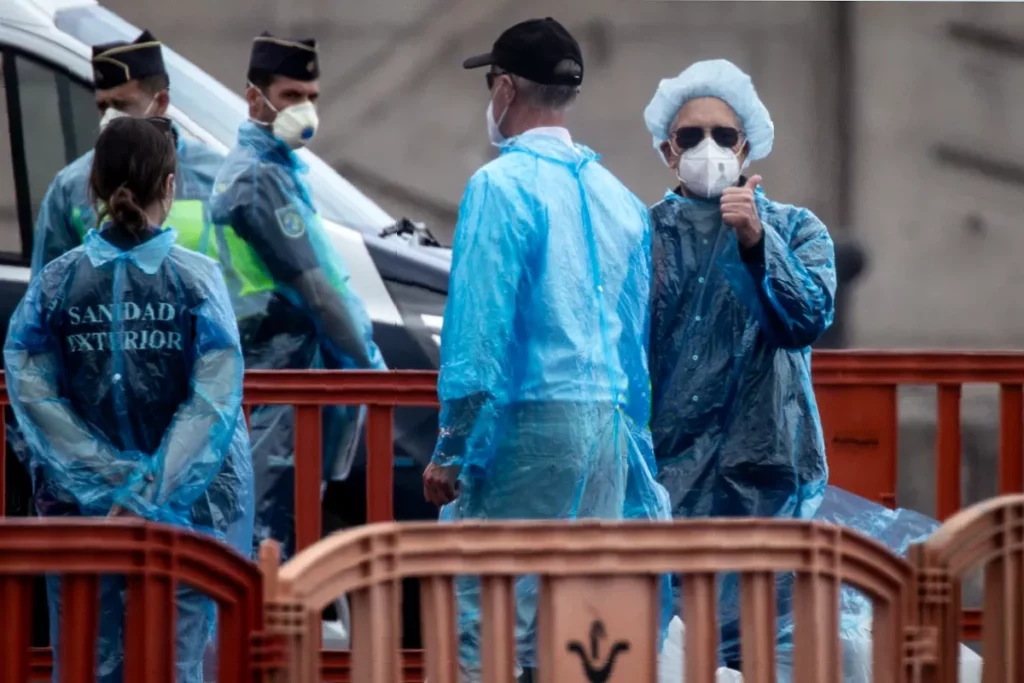
The WHO reported yesterday that of the six laboratory-confirmed cases, all are Andes virus infections. A seventh suspected case was reclassified after testing negative. The global total of eight cases – including the now-discarded one – accounts for the three fatalities. British nationals on board are being closely monitored by the UK Health Security Agency, which has stressed that none are currently reporting symptoms. Those who remain symptom-free will be escorted by UK government staff to a chartered flight from Tenerife, where the ship is now docked, and flown back to Britain under strict infection control measures, including the use of face masks throughout the journey. Upon arrival, they will be transferred to Arrowe Park Hospital for isolation periods of up to 45 days, with regular testing and support from the NHS.
Hantaviruses are a group of viruses carried by rodents – primarily mice and rats – and can cause severe disease in humans. Infection occurs through contact with infected rodents or their urine, droppings or saliva. The most common route is inhalation of airborne particles from disturbed rodent waste, particularly in enclosed spaces. Transmission can also happen by touching contaminated surfaces and then touching the mouth, eyes or nose; rodent bites are a rare but possible route. Crucially, the Andes virus responsible for the MV Hondius outbreak is the only known hantavirus strain capable of limited human-to-human spread. This typically requires prolonged, close contact with a severely ill individual, whose respiratory secretions contain high levels of the virus. Investigators believe the initial cases on board acquired the infection through environmental exposure in Argentina before boarding, and that the confined conditions of the ship may have facilitated subsequent onward transmission between people.
Two distinct syndromes
The severity and presentation of hantavirus infection vary sharply by geography, reflecting different virus strains and rodent reservoirs. In the Americas, infections commonly progress to hantavirus cardiopulmonary syndrome (HCPS), which affects the lungs and heart. In Europe and Asia, the same family of viruses tends to cause haemorrhagic fever with renal syndrome (HFRS), which targets the kidneys and blood vessels. The Andes virus, being a New World hantavirus, is associated with HCPS. The case fatality rate for hantavirus infections ranges from 1–15% in Asia and Europe to as high as 50% in the Americas. For HCPS specifically, rates have been estimated at up to 30–38% in North America, while the Andes virus carries a fatality rate of up to 30–50%, though improved medical care may have reduced this in recent years.
Symptoms typically appear one to eight weeks after exposure, with two to four weeks being the most common interval. Early signs are flu-like: fever, chills, muscle aches (especially in large muscle groups such as thighs, hips and back), headache, dizziness, and gastrointestinal complaints including abdominal pain, nausea, vomiting and diarrhoea. As HCPS progresses, the disease can worsen rapidly to cough, shortness of breath, chest tightness, accumulation of fluid in the lungs, low blood pressure, irregular heart rate and shock. In HFRS, later stages may involve intense headaches, back and abdominal pain, blurred vision, bleeding disorders and kidney failure.
Because these early symptoms mimic those of influenza, COVID-19, viral pneumonia, leptospirosis, dengue or sepsis, the WHO warns that early diagnosis is challenging. It emphasises that a careful patient history is essential, with particular attention to possible rodent exposure, occupational and environmental risks, travel history, and contact with known cases in areas where hantaviruses are present. There is no licensed specific antiviral treatment or vaccine for hantavirus infection. Management is supportive: early access to intensive care, oxygen therapy, fluid replacement, and treatment of respiratory, cardiac, and kidney complications significantly improve outcomes, especially for HCPS patients.
Risk to the UK
The UK Health Security Agency has moved to reassure the public that the overall risk to people in Britain remains very low. Dr Meera Chand, the agency’s deputy director for epidemic and emerging infections, said: “Our thoughts are with all those affected by the hantavirus outbreak onboard the MV Hondius. It’s important to reassure people that the risk to the general public remains very low.” The reason, UKHSA experts explain, is that the only hantavirus strain known to be present in UK rodent populations is Seoul virus, which is carried by rats and does not transmit between people. The Andes virus is not endemic to the UK, and British rodents do not carry this strain. Nonetheless, UKHSA has established arrangements to support, isolate and monitor returning British nationals from the ship, and is contact-tracing anyone who may have been in contact with the vessel or confirmed cases to limit the risk of onward transmission. There is some evidence that hantavirus may be underdiagnosed in the UK, particularly in patients presenting with fever, acute kidney injury and thrombocytopenia who have a history of rodent contact.
Prevention depends primarily on reducing contact between people and rodents. The WHO recommends keeping homes and workplaces clean, sealing openings that allow rodents to enter buildings, storing food securely and managing waste to deter rodents. In areas contaminated by rodents, safe cleaning practices are critical: dampening down areas before cleaning to avoid raising dust, and never dry sweeping or vacuuming droppings. Personal protective equipment – gloves, masks and respirators – should be worn when cleaning rodent-infested spaces, and hand hygiene must be strengthened. During outbreaks or when cases are suspected, early identification and isolation of cases, monitoring of close contacts, and standard infection prevention measures are vital to limit further spread.
For British nationals on board the MV Hondius, UKHSA has confirmed that medical staff will carry out further checks on all passengers and crew before they disembark in Tenerife. Those who do not show symptoms will be escorted by UK government staff to a chartered flight and flown back to the UK, with infection prevention and control measures in place throughout the journey. Passengers, crew and medical teams boarding the flight will wear face masks during transit from Tenerife and during transfer to facilities at Arrowe Park Hospital. The risk to the public in the UK, the agency reiterates, will remain very low.