

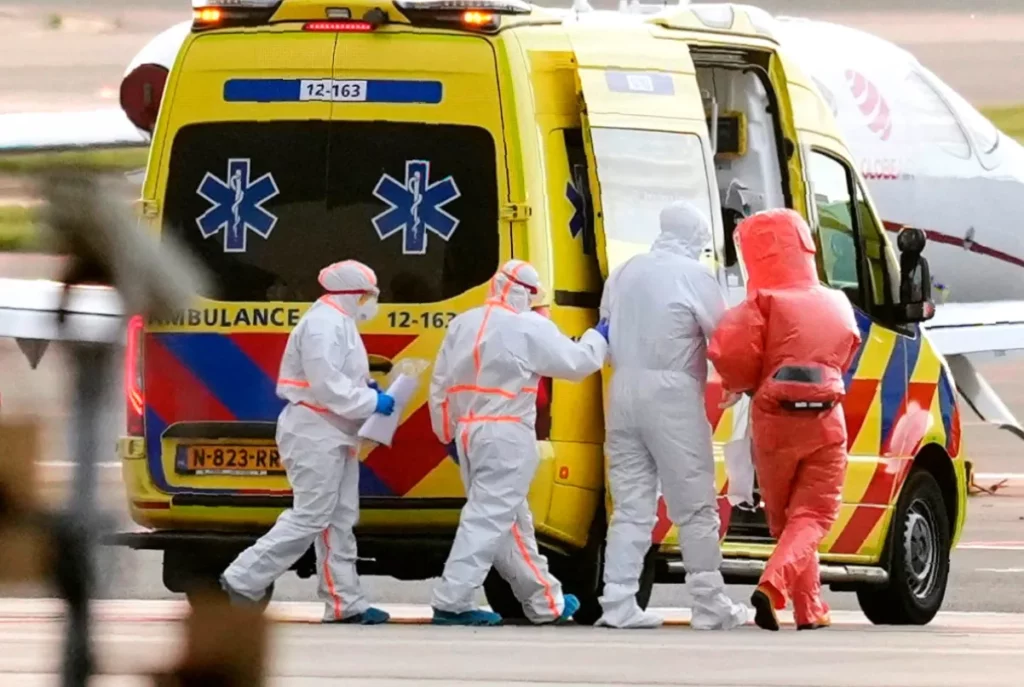
Three lives have been tragically lost in a hantavirus outbreak on a cruise ship, as health officials scramble to contain a rare strain of the virus that has triggered an unprecedented global contact tracing operation. The Dutch-flagged vessel MV Hondius, which departed Ushuaia, Argentina, on 1 April 2026, has become the epicentre of an outbreak that has so far resulted in eight reported cases — five confirmed and three suspected — including one British national who was medically evacuated. The specific strain identified is the Andes virus, a South American variant of hantavirus that is notable for its rare, but documented, capacity for human-to-human transmission.
Hantaviruses are typically spread when people inhale contaminated particles from rodent droppings, urine or saliva. Human cases are uncommon, but the Andes virus presents a unique concern because it can, in rare instances, be passed between people through close and prolonged contact. The incubation period can be as long as 45 days — or six weeks — meaning further cases may yet emerge. The World Health Organization has repeatedly stressed that the risk to the general public remains low. “This is not coronavirus, this is a very different virus,” Maria Van Kerkhove, WHO director of epidemic and pandemic management, told a press conference. “This is not the same situation we were in six years ago.”
Contact tracing underway across multiple countries
Health authorities in at least a dozen countries are now racing to identify and monitor everyone who may have been exposed. The MV Hondius made stops in Antarctica, South Georgia, Tristan da Cunha and Saint Helena before heading for the Canary Islands. Approximately 30 passengers disembarked at the remote British Overseas Territory of Saint Helena on 24 April, among them individuals from at least 12 countries including the UK and the US. The St. Helena government said it was monitoring a small number of people considered “higher-risk contacts” and advised them to isolate for 45 days. About 140 people remain on the ship, which is now headed for the Canary Islands, and none has been reported to be sick.
But authorities face a greater challenge reaching the dozens of passengers who left the ship earlier — some as much as two weeks after a passenger died, but before officials knew a hantavirus was responsible. Those passengers came from at least 12 countries, including several US states — Arizona, California, Georgia and Texas, according to infectious disease experts and state public health officials. The United States’ Centers for Disease Control and Prevention (CDC) said it was closely monitoring the situation and classified the outbreak as a “level 3” emergency response. Texas officials said public health workers had reached two people who left the ship on 24 April, who reported no symptoms and no contact with a sick person while aboard. They agreed to self-monitor with daily temperature checks. President Donald Trump told reporters he had been briefed on the outbreak and expressed hope it was under control. “It’s very much, we hope, under control,” he said.
In the UK, the UK Health Security Agency confirmed that two British nationals tested positive for hantavirus and that a “small number” of their contacts are self-isolating, though none is showing symptoms. British passengers returning to the UK are being asked to isolate for 45 days. Two Canadians who disembarked are in Ontario and have been advised to self-isolate since returning home, the province’s health minister said. Singaporean health authorities are monitoring two men who disembarked at St. Helena and flew home via South Africa; they are being tested for hantavirus and isolated at the National Centre for Infectious Diseases. Monitoring is also under way in Canada, Switzerland, Denmark, Germany, the Netherlands, New Zealand, Saint Kitts and Nevis, Sweden, Turkey and France. The WHO repeated that the risk to the general public was low, noting that fewer than a dozen people are thought to have shown symptoms and that only five cases have been confirmed.
Scientific investigation focuses on Andes virus transmission
Beyond the contact tracing effort, scientists are urgently trying to understand the germ itself. The Andes virus, a member of the hantavirus family found in South America, is among the few hantaviruses believed to be capable of spreading between people. Human-to-human transmission is considered rare and typically requires close, prolonged contact — such as within households or intimate partnerships — but the possibility remains that the virus could mutate. Researchers are therefore analysing its genetics to see whether it has changed in any way that might make it more transmissible.
They are also trying to pin down exactly how it spreads. Dr. Jeanne Marrazzo, chief executive of the Infectious Diseases Society of America, said scientists believe people are mainly infectious when they show symptoms, and that transmission may occur through small liquid particles blown out when an infected person talks, coughs or sneezes. Officials in Argentina believe the first cases may have been contracted during a birdwatching trip in the southern city of Ushuaia. The country’s Health Ministry has yet to dispatch a team, but scientists from the state-funded Malbrán Institute plan to travel to Ushuaia “in the coming days” to investigate. They will also conduct rodent capture and analysis to determine the source of the infections. The Andes virus is endemic to South America and is primarily carried by the long-tailed pygmy rice rat. It causes Hantavirus Pulmonary Syndrome (HPS), which has a case fatality rate of approximately 40% for severe cases. Early symptoms can resemble flu — headache, fever, muscle aches, nausea, vomiting and diarrhoea — before rapidly progressing to pneumonia, acute respiratory distress and shock. There is no specific antiviral treatment or vaccine; care is supportive, with intensive care required for severe cases. An international team is working on a vaccine. In Argentina, there is a suggestion that climate change may be contributing to an increase in hantavirus cases.