

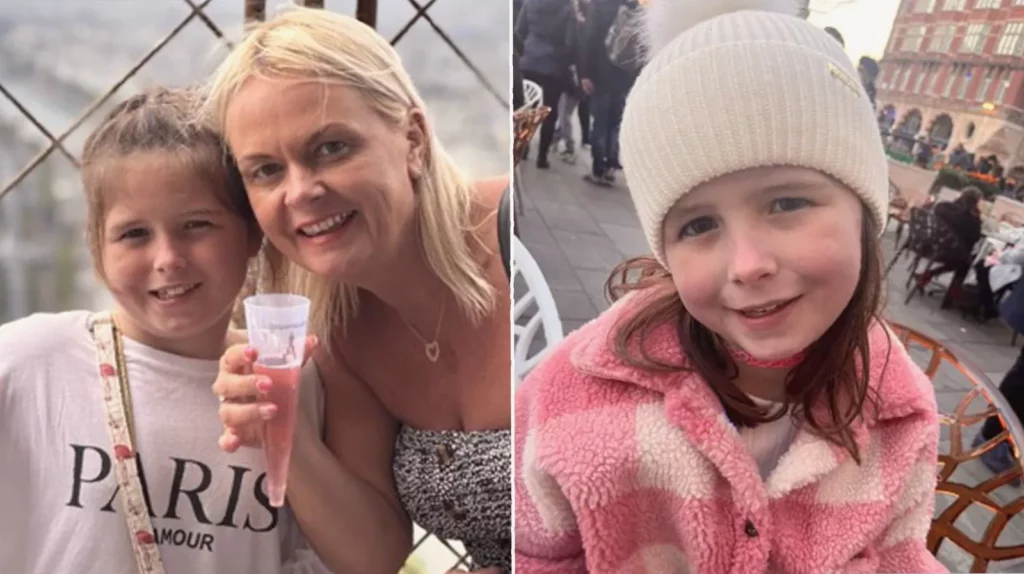
A family holiday turned to tragedy when a 10-year-old girl suddenly fell ill on a Caribbean cruise, beginning a medical nightmare that ended with her parents making the devastating decision to withdraw life support in a New York hospital.
Larissa, from the UK, had been experiencing intermittent sickness and headaches after her family arrived on America’s West Coast for a holiday in August 2024. According to her mother, a doctor initially concluded it was either hormonal or related to the heat and time zones. The family, including Larissa’s father, Dave, and her two teenage brothers, then flew to New York to board a ten-day return cruise.
It was the day before the ship’s return to New York that Larissa said she felt “a bit funny” at a beach club. Her condition deteriorated rapidly: she developed aching legs, needed carrying back to the boat, and that night descended into a sudden delirium, seeing her mother as a duck and singing loudly. Her parents rushed her to the ship’s medical centre, where she was sedated.
A seizure and a race to shore
After a brief period of lucidity where she told her family she loved them, Larissa suffered a severe seizure, her eyes rolling back as she lost control of her bladder. Medical staff rushed in with a defibrillator. Doctors, suspecting a brain tumour—a condition whose symptoms in children can include seizures, balance problems, and behaviour changes—made the urgent decision to speed the ship towards New York to get her to advanced care.
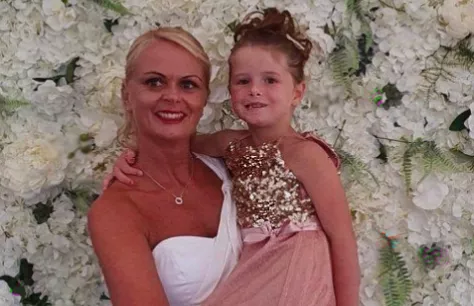
Larissa was placed in a medically-induced coma on a ventilator for the journey, during which her blood pressure and oxygen levels repeatedly dropped. She arrived in New York in the early hours of the morning and was met by a large team of doctors at the hospital. Her parents felt a surge of hope, believing she would be saved.
That hope was extinguished after a CT scan. A doctor told them there was nothing they could do. They found Larissa covered in tubes and devices. Her mother begged for a second opinion, and further neurological tests were conducted. The doctors presented the family with a horrific choice: proceed with 72 more hours of testing, or make the decision to turn off Larissa’s life support.
The impossible decision
The medical team indicated the early signs suggested Larissa would never walk or talk again. At best, she might only be able to move her eyes. Faced with this prognosis, Larissa’s parents knew their daughter would not want to live that way, but they insisted their teenage sons be part of the decision. After the situation was explained to them, the boys unanimously said: “We’ve got to let her go.”
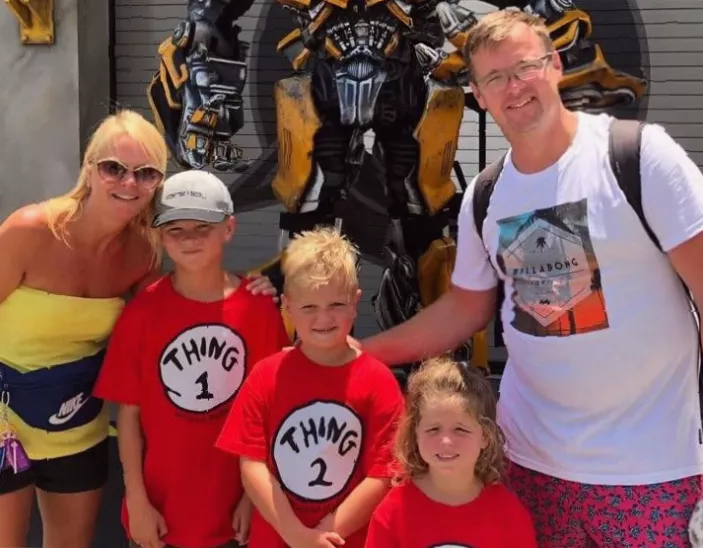
As a family, they decided to withdraw treatment. They gathered by Larissa’s bedside, held hands, and played ‘Twinkle Twinkle Little Star’. Her mother sang. Then the machines were turned off, and Larissa died almost instantly. Her parents took a grim comfort from the speed of her passing, believing it proved there had been no chance of recovery.
In the weeks that followed, shrouded in a haze of grief and bureaucratic procedures, the family did not know why she had died. They received support from the charity SUDC UK (Sudden Unexplained Death in Childhood), which offers help to families after a child’s sudden loss. It was not until October that an American medical examiner who conducted the post-mortem provided the answer: Larissa had died from leukaemia.
Leukaemia is the most common childhood cancer, a disease of the blood and bone marrow with symptoms that can be vague and mimic common illnesses, such as fatigue, recurrent infections, bruising, and bone pain. Survival rates in the UK have improved dramatically, with approximately 85% of children now surviving for five years or more, according to Cancer Research UK. The most common form, Acute Lymphoblastic Leukaemia (ALL), has a survival rate around 90%.
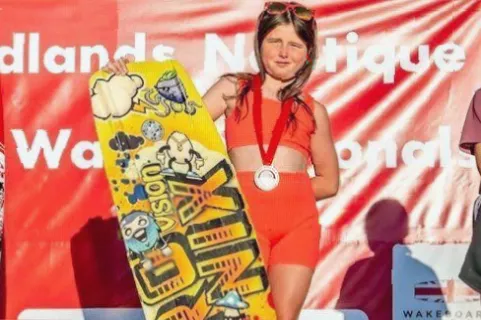
For Larissa’s family, the diagnosis came too late. Three months after her death, her mother had a dream where Larissa told her, “It’s too late for me, Mum, but you can help save others.” This inspired the creation of The Larissa Foundation, which raises awareness and funds for charities focused on bereavement services, children’s hospitals, and leukaemia and blood cancer research and support.
The foundation gave the grieving family a positive focus. Other UK organisations offering support in such devastating circumstances include Child Bereavement UK, The Compassionate Friends, and The Loss Foundation, which specialises in grief following a cancer death. The family’s ordeal underscores the complex landscape of childhood cancer, where research by institutions like The Institute of Cancer Research aims to develop better treatments, and charities like Blood Cancer UK fund critical studies.
Through their work, Larissa’s family keeps her memory alive, ensuring her name is spoken and her joyful spirit remembered, while attempting to help others navigate a loss that has irrevocably changed their own lives.