

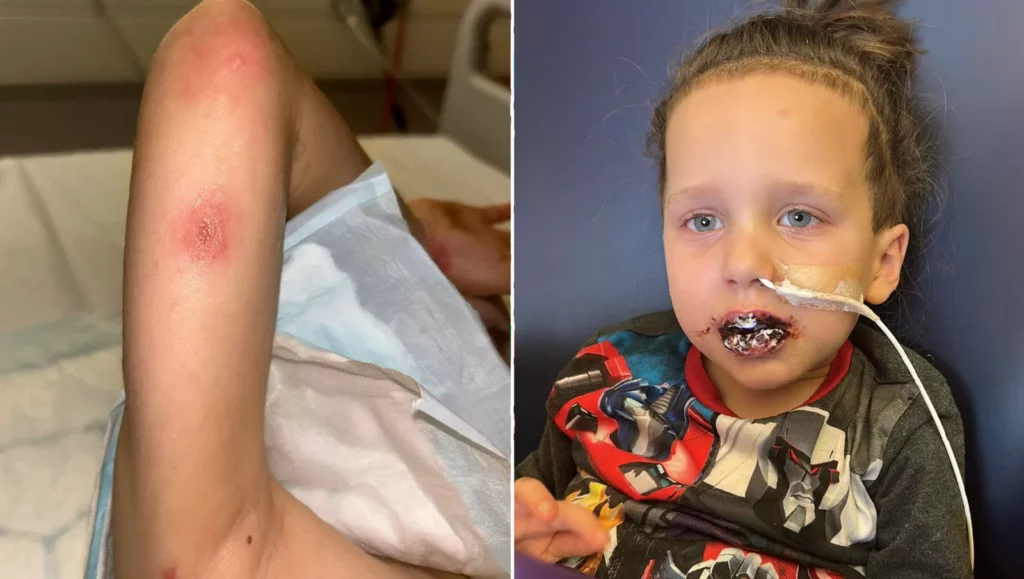
For more than a year, a mother’s instinct told her something was catastrophically wrong with her five-year-old son. She was repeatedly sent home by doctors who dismissed the blisters covering his mouth and eyes as a common childhood illness. But she refused to accept it – and her insistence ultimately led to the diagnosis of a rare, life-threatening condition that had been missed twice.
“It’s Hand, Foot and Mouth disease,” a hospital doctor told her in December 2025, confidently. “That’s what you thought last time, but you were wrong,” she insisted. Yet despite her pleas, medics told her to take Mylo home. Only after his temperature spiked that night, and she returned to hospital refusing to take no for an answer, was he finally admitted – and diagnosed with a severe mucocutaneous eruption that had already attacked his lips, eyes and genitals.
‘I knew there was something very wrong’
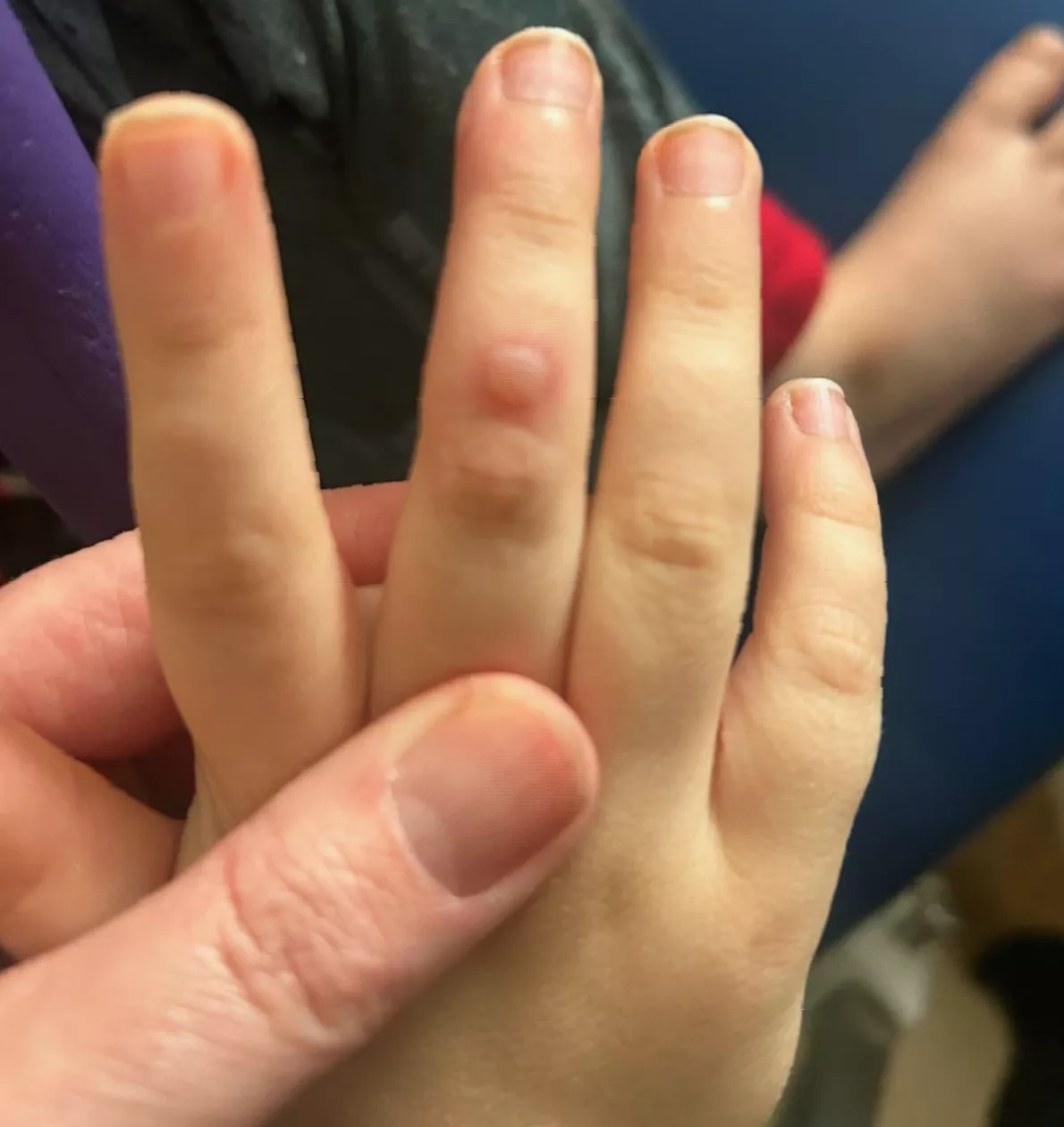
The ordeal began in November 2024, when Mylo woke up with blisters on his hands and mouth. A doctor suspected Hand, Foot and Mouth disease (HFMD), a common viral illness that typically resolves within a week to ten days with little more than paracetamol and fluids. But the following day Mylo’s eyes were swollen and the blisters in his mouth were so painful he would not drink. He was admitted to hospital for three nights, where doctors diagnosed HFMD complicated by a “super infection” called gingivostomatitis – an inflammation of the gums and lips caused by the herpes virus – and treated him with IV fluids and antiviral medication.
He seemed to improve, but as soon as he got home his lips and eyes swelled again, forcing another admission. This time a doctor told his mother she suspected Stevens-Johnson Syndrome (SJS). “Do not Google it,” she said emphatically. Of course, she did – and gasped. SJS is a rare but serious, life-threatening skin reaction, often triggered by infections such as colds or flu. It causes flu-like symptoms followed by a rash that develops into blisters and painful sores affecting the skin, eyes, mouth, throat and genitals. Complications can include skin scarring, corneal damage, inward-turning eyelashes and, at worst, blindness. Mylo was seen by eye doctors every day because of the risk. “It was horrific,” his mother said. “I was so scared but tried to keep upbeat when I was with Mylo and only broke down in tears when I left the room.” After five days the swelling subsided and he was discharged.
‘This time was much worse’
Thirteen months later, in December 2025, Mylo was off school with a cough and cold. Five days in, his mother noticed a blister on his lip. “I don’t like the look of that,” she told her partner, Chris, who reminded her that doctors had said a recurrence was very unlikely. But within an hour another blister appeared inside Mylo’s mouth. A horrible sense of déjà vu hit. They took him to hospital, where doctors insisted he go home. “This just isn’t right,” she thought as they drove away. That night Mylo’s temperature spiked and they returned – and this time, she said, “I wasn’t taking no for an answer.”
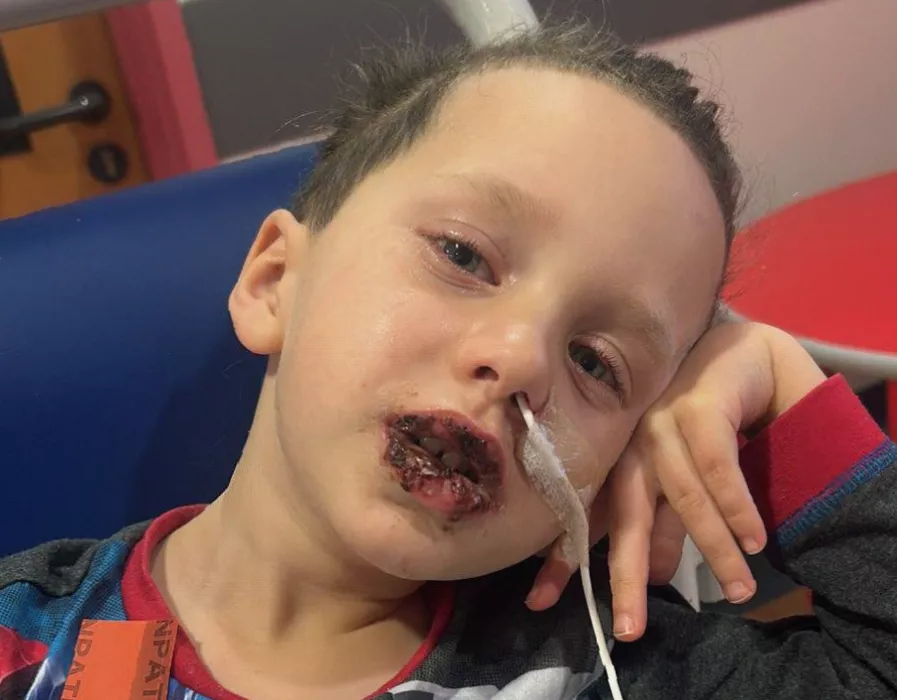
Doctors finally saw how unwell he was and admitted him. This episode was far more severe. Mylo tested positive for chickenpox, which doctors suspected may have triggered the recurrence. His lips swelled and blistered so much that he could not even drink water through a straw. The swelling and blisters covered his eyes and genitals. He was on morphine and fed through a nasal NG tube that went through his nose into his stomach. His mother held a bowl under his mouth to catch the drool. “He couldn’t speak because of the blisters in his mouth, so our interactions were limited to nods or thumbs-up,” she said.
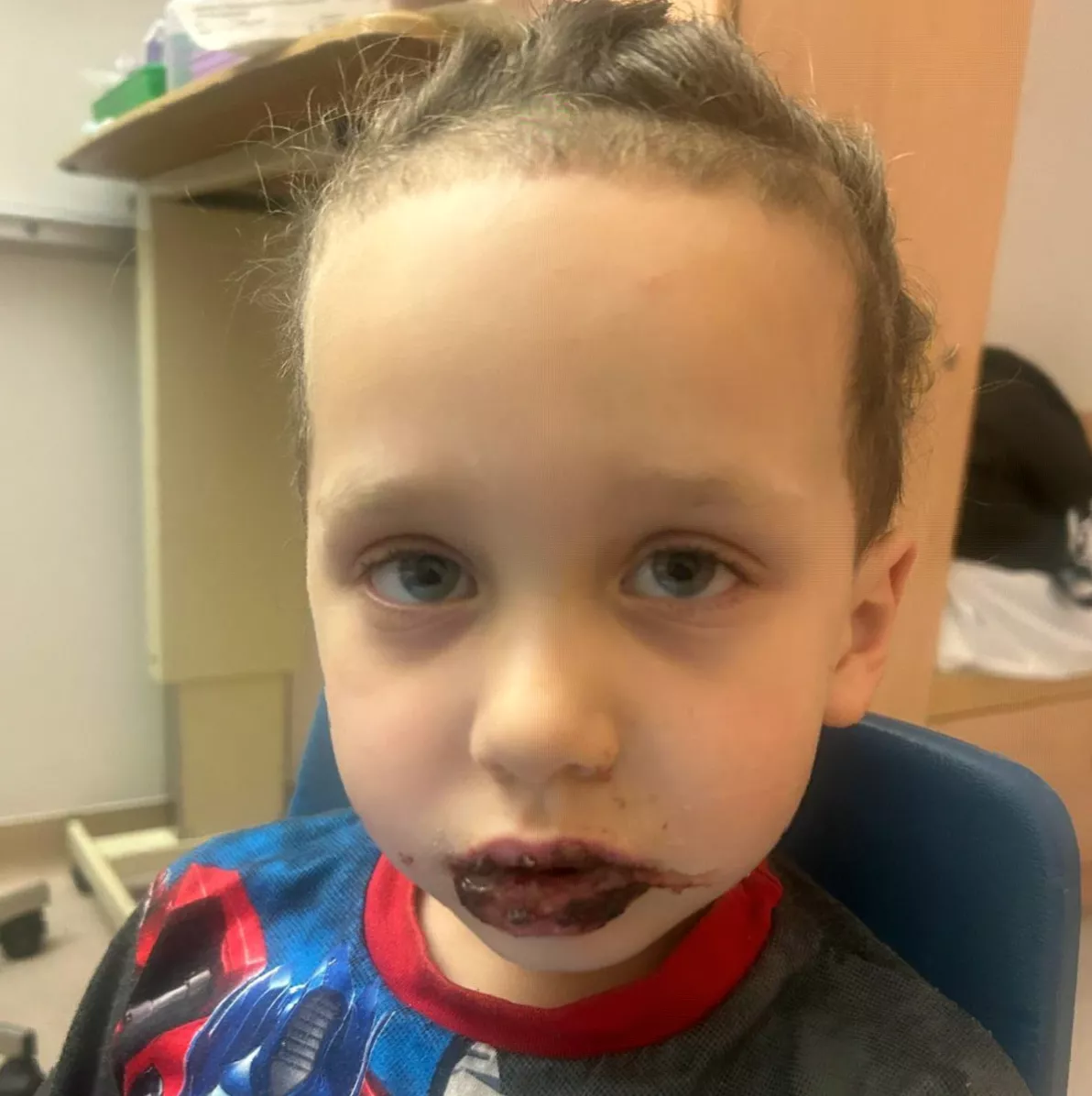
This time doctors diagnosed Mylo with Reactive Infectious Mucocutaneous Eruption (RIME), a condition that closely mimics Stevens-Johnson Syndrome and is usually triggered by an infection. The doctors could not be certain, but they suspected Mylo had probably had RIME the year before, too.
What is RIME and how does it differ from SJS?
RIME is a mucocutaneous disease characterised by significant involvement of the mucous membranes – the mouth, eyes and genitals – with minimal or no skin involvement. It was previously known as Mycoplasma pneumoniae-induced rash and mucositis (MIRM), but is now understood to be triggered by a broader range of infectious agents, including enteroviruses, influenza B virus and SARS-CoV-2. Symptoms include fever, malaise, cough, followed by severe mucositis: swelling, erosions and crusting of the lips and oral mucosa, sometimes with conjunctivitis and genital involvement.
The key difference from Stevens-Johnson Syndrome is that RIME typically involves far less skin blistering and peeling, while SJS can cause widespread skin detachment and carries a higher risk of organ damage and death. However, RIME can still be severe. While it generally has a good prognosis, complications such as corneal ulceration and even blindness have been reported. Recurrences are considered rare, but subsequent episodes can be triggered by different microorganisms – and Mylo’s second, more serious episode appears to have been set off by chickenpox.
During his second admission, doctors were so concerned by the amount of dead skin tissue in his mouth and his lack of improvement that they discussed putting him to sleep and cutting away the tissue. In the end they did not need to: after six days, a small improvement was noticed. Mylo began drinking liquids through a straw. A few days later he came home, still covered in lesions. His parents had to use a little sponge to clean debris from his lips, and he needed steroid eye drops until January, with weekly hospital monitoring.
Living with uncertainty
For now, Mylo is back to normal – obsessed with football, back at school with his friends, and with no lasting damage. But the family has no clear answers about whether or when this reaction might return. He is due to see a paediatric consultant in April for genetic testing, which could reveal whether he carries certain genes that make him more susceptible to RIME. Genetic susceptibility is suspected in some families, though specific genes have not yet been identified. In the meantime, his mother is giving him vitamins to support his immune system, hoping to protect him against future viruses and infections.
“We’re left living in a world of uncertainty, unsure if even a minor cold could trigger it again – which, for the average five-year-old, is very hard to avoid,” she said. “But while I’m nervous about Mylo being ill again, he needs to live his life. I would love to keep him at home and protect him but it’s not possible or practical – and we’re grateful to have our happy, healthy boy back.”
Looking back at the pictures, she said, it is hard to believe how poorly Mylo was. “He was incredibly unwell, and I’m so thankful I kept pushing, taking him to the hospital again and again. I was sent home repeatedly, but I knew there was something wrong. No one knows your child better than you.”