

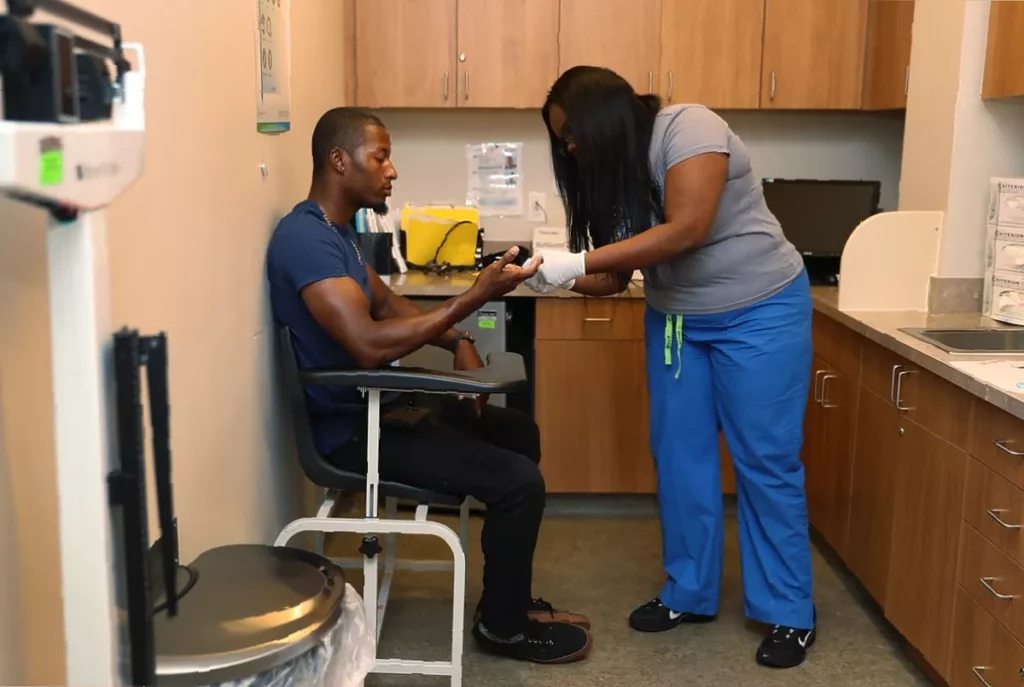
Proposed cuts to US federal HIV prevention funding could trigger a surge of up to 10% in new infections over the next five years, according to new computer modelling, with researchers warning the retreat would reverse decades of hard-won progress against the disease.
The study from the Johns Hopkins School of Medicine suggests that eliminating Centers for Disease Control and Prevention (CDC) funding for domestic HIV testing could lead to approximately 12,751 additional infections nationwide across 18 states. The projections underline the critical role of testing in curbing transmission, as people unaware of their HIV status are more likely to pass on the virus.
Disparate Impact Across States
The burden of these potential new infections would not be shared equally. The model predicts a stark geographical divide, with states currently more reliant on CDC-funded testing programmes facing far sharper increases.
Dr. Todd Fojo, an associate professor at Johns Hopkins who led the research, provided a telling contrast. “In Washington state, our model predicts that the number of infections increases by 2.7 percent without CDC-funded tests, but in Louisiana, infections would increase by almost 30 percent,” he said. The disparity, he explained, is because CDC-funded tests are diagnosing more infections in Louisiana than in Washington currently. States with more pronounced rural HIV epidemics are also expected to be disproportionately impacted when testing resources are pulled.
This potential crisis stems from budget proposals that would radically reduce HIV prevention spending. According to the non-profit HIV+Hepatitis Policy Institute, new budget plans could limit prevention funding to $220 million, a fraction of historic levels, and cut into the Ryan White HIV/AIDS Program which serves low-income or uninsured patients.
Carl Schmid, the institute’s executive director, warned that “the dismantling of HIV prevention and surveillance and other programs will just lead to more HIV infections and higher health costs down the road.” He noted that while existing care for over 600,000 people on the Ryan White programme might be maintained, the prevention cuts would fuel future outbreaks.
Unravelling a Bipartisan Legacy
The proposed cuts mark a stark departure from recent federal policy. The current National HIV/AIDS Strategy, updated in 2020, and the “Ending the HIV Epidemic in the U.S.” (EHE) initiative launched in 2019, both aim to reduce new HIV infections by 90% by 2030. The Save HIV Funding Campaign has pointed out this contradiction, stating the proposals are “a far cry from the first Trump Administration that called for ending HIV in the U.S. by 2030.”
Federal investment in HIV has been substantial and historically enjoyed bipartisan support. In the 2024 financial year, the Ryan White Program alone was funded at $2.6 billion, providing comprehensive care to over 600,000 people annually. The CDC received approximately $1.39 billion in FY 2023 for HIV, viral hepatitis, STI, and tuberculosis prevention, much of it distributed to local health departments.
Overall federal spending on domestic and global HIV efforts reached approximately $43.0 billion in FY 2022. However, a growing share of this is mandatory spending on care through programmes like Medicaid, while discretionary funding for prevention and research has seen more modest increases.
Despite progress—new infections declined by 12% nationally from 2018 to 2022—the epidemic persists, with nearly 40,000 Americans diagnosed annually. It disproportionately affects racial and ethnic minorities and gay and bisexual men, with the Southern US accounting for 51% of new diagnoses in 2023.
Beyond testing, the Johns Hopkins researchers are now examining what a loss of CDC funding for other prevention activities would entail. Further reports indicate the proposed FY 2026 budget could eliminate all CDC domestic HIV prevention funding, while also cutting the Secretary’s Minority HIV/AIDS Fund, SAMHSA’s Minority HIV/AIDS Initiative, and the Housing Opportunities for Persons with AIDS (HOPWA) program. Reductions to National Institutes of Health research funding are also proposed, which has already led to the termination of numerous grants focused on HIV prevention and care.