

The Wirral University Teaching Hospital NHS Foundation Trust is once again housing returned British nationals in isolation, after NHS England and the UK Health Security Agency (UKHSA) requested the use of its facilities on the basis of how swiftly and effectively the trust responded to the repatriation of citizens from Wuhan and the Diamond Princess cruise ship at the start of the Covid-19 pandemic.
The request came as part of a larger operation to repatriate British passengers and crew from the MV Hondius cruise ship, which has been linked to an outbreak of hantavirus. The virus, specifically the Andes strain, is known to be capable of rare human-to-human transmission. The outbreak has so far resulted in eight confirmed cases and three deaths, according to the World Health Organisation, which confirmed six cases linked to the vessel as of 10 May 2026, with four patients hospitalised. One previous suspected case has been reclassified. Affected individuals include British nationals in the Netherlands and South Africa, as well as a suspected case on the remote British Overseas Territory of Tristan da Cunha.
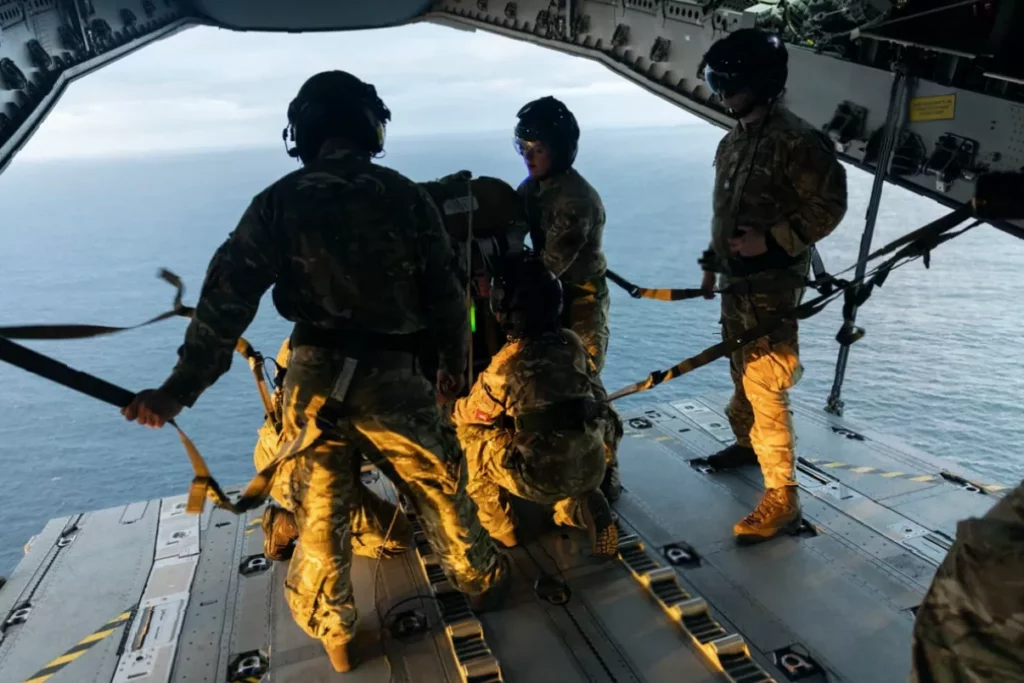
The extraordinary repatriation effort began after a British national who had disembarked from the MV Hondius was confirmed as a suspected hantavirus case on Tristan da Cunha, the most remote inhabited place on Earth. With no airstrip on the island and routine access only by boat — a journey that takes roughly a week from South Africa — the UK military was called in. An Army specialist team from 16 Air Assault Brigade, comprising six paratroopers and two military clinicians, was parachuted from an RAF A400M aircraft onto the island. In the same operation, vital medical supplies including oxygen were air-dropped. The Minister for the Armed Forces, Al Carns, described it as an “extraordinary operation in incredibly challenging circumstances”. It was the first time the UK military has used a parachute jump to deliver humanitarian medical support.
British passengers from the MV Hondius were taken to Tenerife, Spain, where they were tested for hantavirus before disembarking. Those who tested negative and showed no symptoms were then boarded onto a chartered repatriation flight to the UK.
Upon arrival, returning passengers and crew are being transferred to an isolation facility at Arrowe Park Hospital on the Wirral. The same facility was previously used to house British citizens repatriated from Wuhan and the Diamond Princess cruise ship at the onset of the Covid-19 pandemic. Janelle Holmes, chief executive of Wirral University Teaching Hospital NHS Foundation Trust, wrote in a letter to staff: “We have been asked by NHS England and the UK Health Security Agency (UKHSA) to house the guests, recognising how quickly and positively we responded to and supported the repatriation of British nationals from Wuhan and the Diamond Princess prior to the Covid-19 pandemic.”
Holmes detailed the screening process: guests will be checked for symptoms before arrival, and any who show signs of illness will be transferred to a specialised facility. The initial stay at Arrowe Park is expected to be approximately 72 hours for assessment and screening. Following that, passengers may be required to self-isolate for up to 45 days — the maximum incubation period for hantavirus. During this time they will be monitored by the UKHSA, with testing carried out as necessary. Public health specialists will assess each individual’s living arrangements to determine whether they can isolate at home or in another suitable location.
Hantaviruses are primarily spread through contact with infected rodents — their urine, droppings and saliva — usually by inhaling contaminated dust or touching contaminated surfaces and then the mouth, nose or eyes. The Andes strain identified in this outbreak is notable for its rare ability to pass between people. Symptoms, which typically appear one to five weeks after exposure, mimic flu: sudden high fever, muscle pain, headache, nausea and vomiting. In severe cases the infection can progress to Hantavirus Pulmonary Syndrome, where the lungs fill with fluid, or Hemorrhagic Fever with Renal Syndrome. There is no specific treatment, cure or vaccine; care is supportive, focusing on intensive intervention if the disease is recognised early. The risk to the general public in the UK is considered very low.
Tristan da Cunha, a British Overseas Territory with a population of roughly 240 to 250, has no airstrip and is ordinarily accessible only by sea. The island’s healthcare facilities, the Camogli Healthcare Centre, were upgraded in 2016–2017 to meet UK NHS standards, but complex or serious cases still require evacuation to Cape Town. The island has a history of coping with isolation: a volcanic eruption in 1961 forced a temporary evacuation of the entire population.