

Angela Rayner breached the Ministerial Code by failing to pay the correct amount of stamp duty on a flat she bought in Hove, an independent ethics investigation has found. The Deputy Prime Minister referred herself to the Prime Minister’s independent ethics arbiter – the formal guardian of the Ministerial Code – after the issue was exposed. The arbiter concluded that although Ms Rayner had cooperated with candour, she had breached the Code by not seeking proper expert tax advice.
The breach has proven catastrophic for Sir Keir Starmer’s leadership and continues to shake his authority. The controversy centred on complex property arrangements involving a trust set up for Ms Rayner’s disabled son. She resigned from her government posts and as Deputy Leader of the Labour Party in September 2025, a direct consequence of the stamp duty scandal. The political fallout has been compounded by substantial losses for Labour in the May 2026 local elections, with Reform UK making significant gains – taking control of several councils – in what Nigel Farage called a “historic shift in British politics.”
Ms Rayner’s resignation and the local election defeats have triggered open calls for Sir Keir to step down, with Labour MPs, including Catherine West, reportedly threatening a leadership challenge. Wes Streeting, the Health Secretary, has emerged as a potential successor with considerable internal backing. Sir Keir’s judgment has also been questioned over his decision to appoint Peter Mandelson as ambassador to Washington in 2024, despite Mr Mandelson’s past ties to Jeffrey Epstein.
Elections as a referendum on Starmer
The upcoming elections on 7 May are being treated by many as a major test of popularity for all parties and a de facto referendum on Sir Keir Starmer’s premiership. In Wales, once a Labour heartland built on steel and coal, the decline of those industries has shifted the workforce towards services, retail and finance – territory now seen as fertile ground for Reform UK and the Green Party, while Plaid Cymru remains a significant force. In Scotland, Labour faces different challenges, including tensions between the Scottish leadership and the UK party leadership. The Prime Minister has appeared oddly absent from parts of the campaign, according to observers.
The political turbulence has been chronicled in a recent column by Alastair Stewart, the veteran newsreader and commentator. Writing ahead of the May elections, Mr Stewart noted that both the Rayner scandal and the party’s electoral setbacks “have proven catastrophic for Keir Starmer and will continue to shake his leadership for some time.” He described the elections as “fascinating” and likely to be treated as a referendum on the Prime Minister. In the same column, Mr Stewart also relayed a conversation with his son Freddie, who declared he would not vote because “they’re all as bad as each other” – a sentiment that reflects the broader disaffection believed to be fuelling the rise of Reform UK.
Personal health and charity work
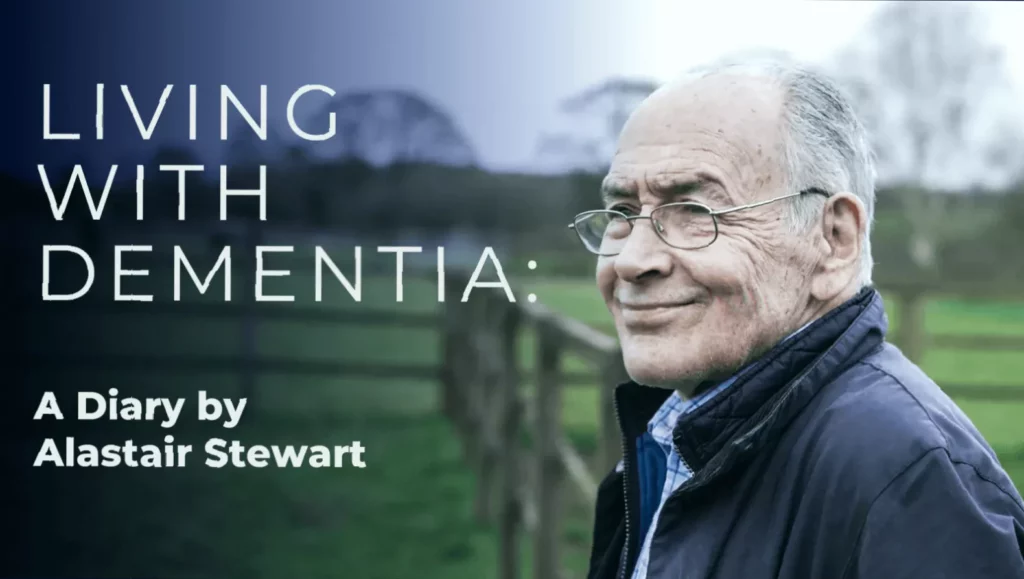
Mr Stewart, who was diagnosed with early-onset vascular dementia in September 2023 after a series of minor strokes, has been undergoing further medical tests to determine the cause of his anaemia and how best to treat it. He has spoken openly about his diagnosis, describing initial difficulties with tasks such as tying shoelaces and reading an analogue clock. His wife, Sally, was instrumental in noticing the warning signs. Mr Stewart retired from regular broadcasting on GB News in March 2023, ending a 44-year career as Britain’s longest-serving male newsreader.
In his recent column, he wrote about two old friends who have reached out to him. Ruari McAllion, from his student politics days, regularly takes him for tea. Geoff Dennis, whom he admired from the charity world, invited him to lunch in London – an invitation Mr Stewart declined, explaining that he “tends to avoid London since my diagnosis.” Mr Stewart’s connection with Mr Dennis dates back to the latter’s work with Care UK and its microfinance affiliate Lendwithcare, an initiative of CARE International UK that allows individuals to make small loans to entrepreneurs in low-income countries. Mr Stewart supported and invested in Lendwithcare, and made two foreign trips with Mr Dennis to help produce fundraising videos.
The first was to Srebrenica, the site of the 1995 massacre of more than 8,000 Bosniak men and boys by Bosnian Serb forces. Mr Stewart recalled meeting widows who were clients of the charity, including one woman he had lent money to buy chickens so she could sustain herself and sell surplus eggs. He described seeing the little white crosses on the hillside marking where some had died, the factory where many were massacred – now a museum, established in large part thanks to the efforts of Paddy Ashdown, the former High Representative for Bosnia and Herzegovina – and a cemetery on the scale of Commonwealth war graves. “It was deeply moving and terrifyingly recent,” he wrote.
The second trip took Mr Stewart to Chad, where they helped farmers, including one woman who wanted a fridge to sell cold drinks and a motorbike to work as a taxi driver and deliver goods. He described those as “remarkable days” that demonstrated the rich and varied good charities do. Mr Dennis later went on to run a donkey charity and another organisation helping vulnerable young children. Mr Stewart called him “simply one of life’s good people.”