

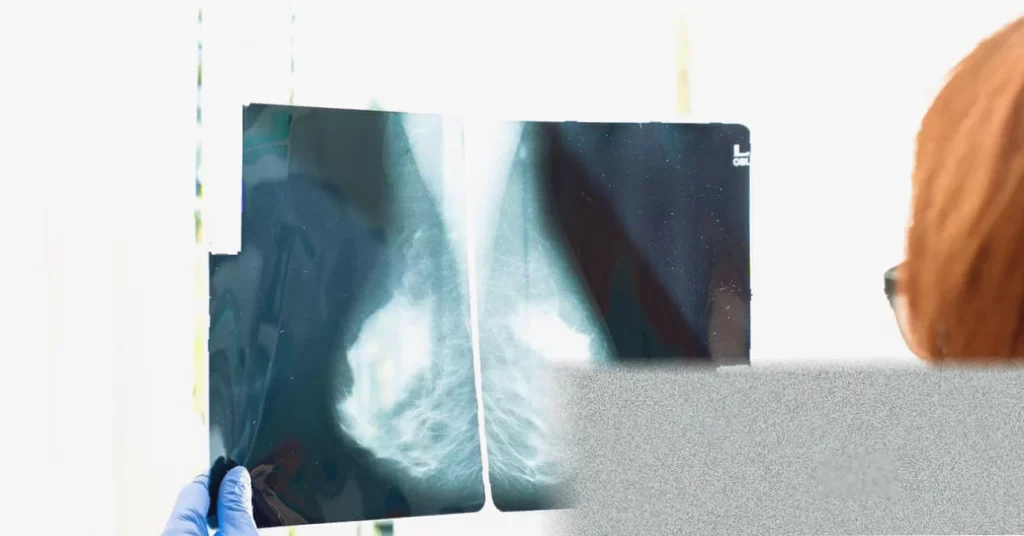
Cancer screening: Why the NHS stops routine invitations at 70
Older people in the UK remain entitled to request bowel and breast cancer screening even after they pass the upper age limit for routine invitations, the NHS has confirmed. The clarification follows letters from readers questioning why the health service stops sending automatic appointments for bowel cancer screening after age 74 and breast cancer screening after age 70.
Dr John Doherty of Stratford-upon-Avon explained the medical rationale in a letter: “Screening – testing because of risk, not symptoms – stops when the chance of helping you drops below the chance of harming you. Diagnostic testing is done at any age.” The NHS bases its screening programmes on a balance of benefits and risks. For breast cancer, routine mammograms are not offered to women under 50 because of lower cancer risk and difficulties interpreting images in denser breast tissue. The decision to stop routine invitations after 70 is similarly rooted in evidence that, for the general population in that age group, the potential harms may outweigh the benefits.
However, as David Duell of Durham pointed out, people over the thresholds can still access screening. Under the NHS Bowel Cancer Screening Programme in England, individuals aged 50 to 74 are routinely invited every two years using a faecal immunochemical test (FIT) kit sent by post. Those aged 75 and over can request a kit every two years by calling the bowel cancer screening helpline on 0800 707 6060. In Scotland, the age range is also 50 to 74, with over-74s able to call 0800 012 1833. In Wales, routine screening runs from 50 to 74, and in Northern Ireland from 60 to 74.
The bowel cancer programme itself is being enhanced. A phased rollout that began in April 2021 is lowering the starting age in England from 60 to 50, with everyone aged 50 to 74 expected to be covered by April 2025. Meanwhile, the detection threshold for the FIT kit in England is being reduced from 120 micrograms of haemoglobin per gram of faeces (µg Hb/g) to 80µg Hb/g, a change recommended by the UK National Screening Committee to increase sensitivity. It is projected to lead to around 600 more early bowel cancer diagnoses per year in England and identify an additional 2,000 people with high-risk polyps annually, reducing late-stage diagnoses and deaths by about 6%. Scotland and Wales already use the lower threshold. The old “bowelscope” screening – a one-off flexible sigmoidoscopy offered at age 55 – is no longer part of the standard programme in England.
For breast cancer, the NHS Breast Screening Programme routinely invites women aged 50 to 70 every three years, with first invitations sent between ages 50 and 53. Women aged 71 and over are not automatically invited but can self-refer every three years by contacting their local breast screening unit or GP. A study called the AgeX trial, which ran from 2009 to 2020, invited some individuals aged 47–49 and 71–73 to assess extending the age range to 47–73; findings are expected in 2031. Some areas have already begun extending routine invitations to women aged 71–73. Transgender and non-binary individuals may also be eligible depending on their sex registered with the GP and whether they have undergone certain medical procedures.
The NHS stresses that screening is for people without symptoms. Anyone experiencing potential cancer symptoms – such as a lump, unusual bleeding, or changes in bowel habits – should contact their GP immediately, regardless of their age or when they last had a screening test.
Chicken farming and environmental concerns
Elsewhere in the correspondence, a reader recalled a very different era of food production. Ann Newell of Thame, Oxfordshire, wrote: “As a child in the 1950s, I remember eating chicken once a year, at Christmas. The bird came from a local farm. Now millions of chickens are raised in huge battery farms.” Her letter referred to a recent article about an industrial chicken producer hitting out over claims of river pollution in the Wye and Usk catchments. She asked: “Time to stop eating chicken?”
An artist’s challenge
Rob Johnsey of Falmouth, Cornwall, made a playful request. He said he would love to see an illustration of a description coined by the late comedian Tony Capstick – “great useless, spawny-eyed, parrot-faced wazzock” – and suggested Sir Quentin Blake, Gerald Scarfe or David Shrigley as possible artists.
Football payoffs
Finally, Toby Wood of Peterborough took issue with a caption in the print edition of the paper’s sport section. The caption stated that Liam Rosenior had “paid the price” for Chelsea’s disappointing recent form. Mr Wood noted that Rosenior reportedly received a £4m payoff. “If receiving a reported £4m payoff is ‘paying the price’,” he wrote, “then I may apply to be the next manager.”